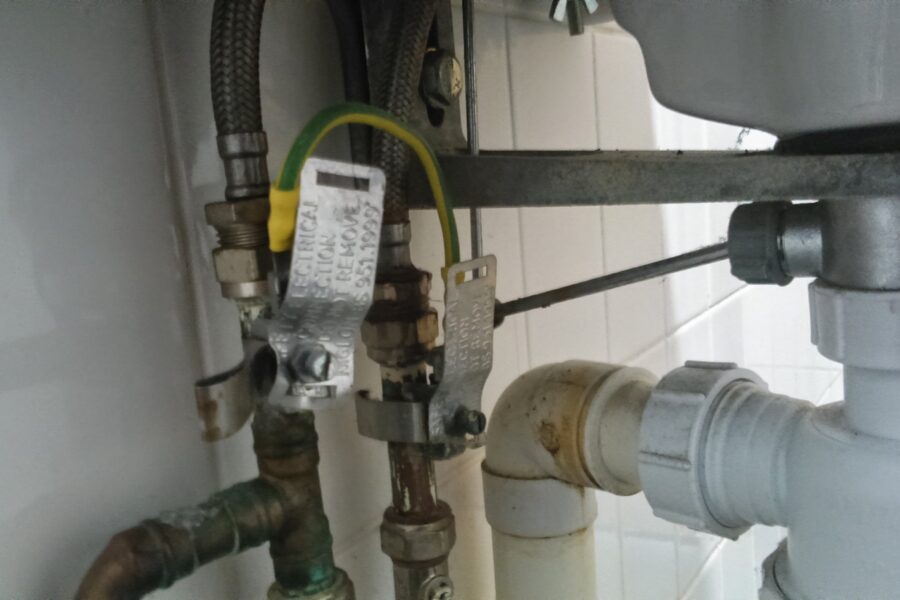
If hot water runs weakly but cold water flows normally, first compare more than one fixture. One affected faucet calls for a different investigation than weak hot flow at several sinks. Neither pattern, by itself, proves that you need a new water heater.
This guide helps you record the pattern and choose the next step without opening a heater, disconnecting supply lines, or changing safety controls. If both hot and cold are weak throughout the house, start with our whole-house low water pressure guide instead.
Compare hot and cold before buying parts
A weak-looking stream describes flow, not a measured pressure value. Portland Water Bureau distinguishes the two and recommends comparing hot and cold at different outlets when conditions change. A gauge reading and a faucet observation answer different questions.
Use this table to choose your route. It is a sorting tool, not a diagnosis of the failed part.
| What you notice | Next step |
|---|---|
| Only one faucet has weak hot flow; its cold flow and other hot outlets are normal. | Use the single-faucet checks below. Record the faucet model before choosing parts. |
| Several hot outlets are weak; cold flow remains normal at those locations. | Record the shared hot-side pattern for a plumber or property manager. |
| Hot and cold are both weak at many fixtures. | Follow the whole-house troubleshooting route. |
| Flow looks normal and water eventually becomes hot, but only after a wait. | Use the hot-water delivery delay guide to record the delay pattern during ordinary use. |
| Flow looks normal, but the water never warms up or runs cold quickly. | Follow our no hot water troubleshooting guide to compare one fixture with the whole house and choose safe next steps. If only the shower stays cold while sinks get hot, use the shower-only hot-water guide. |
| Flow is acceptable alone but drops when another outlet runs. | See pressure drops when multiple fixtures run. |
If the change began during freezing weather, use the cold-weather flow checks before choosing a repair.
A short, no-disassembly comparison
- Choose two accessible sinks. Prefer different rooms. Avoid using a shower for this check, where a temperature change could expose someone to hot water.
- Keep the conditions similar. Make observations with other household water use paused when practical. Note any dishwasher, washing machine, or irrigation use you cannot pause normally.
- Observe each faucet’s cold and hot settings separately. Use the ordinary handle controls briefly, keeping people out of the stream. Note “normal,” “weaker than usual,” or “no flow.” Do not collect hot water in a handheld container.
- Write down the timing. Was this sudden, gradual, or first noticed after plumbing work? Record the last time flow seemed normal. A short observation cannot establish a normal baseline for an unfamiliar faucet.
Do not compare the absolute size of a kitchen stream with a shower spray: different fixtures have different outlet designs. Compare each fixture with its own usual behavior and look for a pattern across locations.
If only one faucet’s hot side is weak
Moen’s troubleshooting for hot-only or cold-only low flow identifies the shutoff/supply path as a starting point, with a cartridge investigation if the supply checks do not resolve the issue. That is manufacturer guidance, not proof that every faucet with this symptom needs a cartridge.
From a dry, accessible position, look for an obviously bent supply hose, moisture, or signs of recent work. Photograph the faucet and accessible connections for the service person. Do not loosen fittings to “check pressure,” force a stiff shutoff, or assume that a valve’s color or left/right position identifies the hot line.
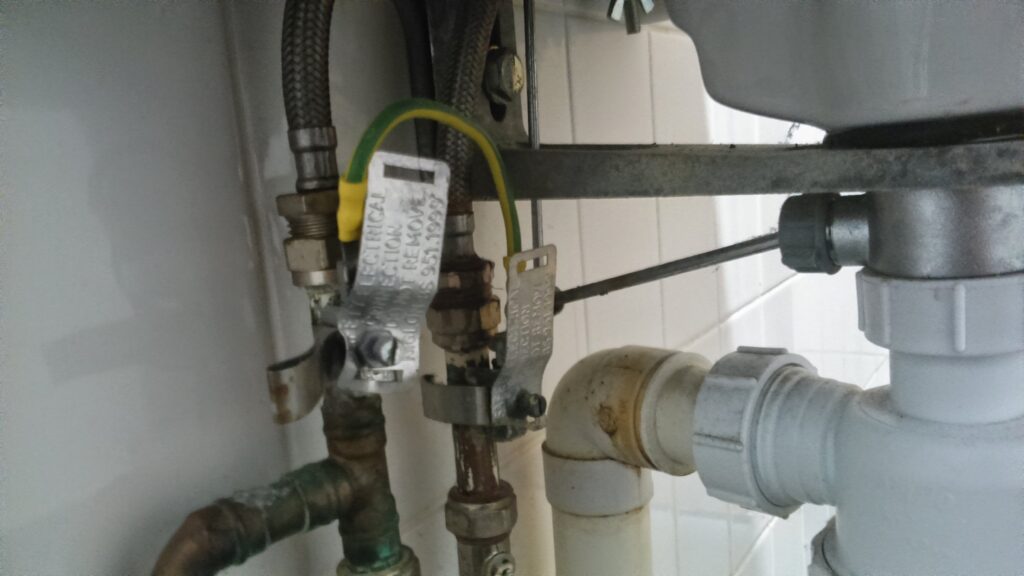
Continue with low water pressure at one faucet for model-aware checks. If both settings at that one faucet are weak, the aerator-cleaning guide may be relevant. Do not start replacing aerators throughout the house simply because multiple hot outlets are weak.
If several hot fixtures are weak but cold is normal
Give a plumber or property manager the comparison results before requesting a specific repair. Ask them to trace the common hot-water supply path and check the equipment actually installed. A.O. Smith’s cited electric-water-heater manual lists a partly closed supply valve and damaged connection liners among possible hot-side restrictions. Those examples apply to that equipment; they are not a universal diagnosis or homeowner repair checklist.
If the change followed a water-heater installation, valve replacement, or other service, contact the installer with the date and affected fixtures. Do not reopen a valve that may have been closed deliberately. If you rent or share a central hot-water system, report the issue to building management rather than adjusting common equipment.
You can photograph an accessible model label and any visible display message without removing a cover. Do not drain or flush the heater, disconnect hoses, adjust a mixing valve, or turn up the house pressure as an experiment. Use a qualified service provider and the exact model’s instructions for equipment work.
Hot water not working in cold weather: weak flow or no heat?
First separate missing flow from missing warmth. If the stream looks normal but stays cold, use the no hot water guide. A weak stream or no flow from the hot setting calls for a different investigation.
If hot flow suddenly slows or stops during freezing weather, record which fixtures are affected, whether their cold flow is normal, and whether the home lost heat. The American Red Cross’s frozen-pipe guidance identifies vulnerable plumbing in unheated spaces and recommends protecting both hot and cold pipes. The weather is a clue, not proof of a frozen pipe or a failed heater.
Use the signs of frozen pipes guide to check notices, compare safe observations, and choose who to call. Do not heat piping, open the water heater, or alter gas, electrical, or temperature controls to investigate. Ask a licensed plumber or building manager for prompt assessment of suspected freezing.
Active leakage or wet electrical equipment takes priority: stop the checks and keep clear. If flow returns, check safely accessible areas for new leaks; restored flow does not establish that the piping escaped damage.
Copy this observation log for a service call
Replace the blanks in this template. A specific description is more useful than a guessed cause.
First noticed: ___ Sudden or gradual: ___
Kitchen sink: cold ___ / hot ___
Bathroom sink: cold ___ / hot ___
Other affected fixture: ___Other water running during the check: ___
Recent plumbing work and date: ___
Visible leak or display message, observed without touching: ___
Equipment model, if safely visible: ___
Example wording: “The kitchen and bathroom hot settings became noticeably weaker yesterday. Cold flow at both sinks looks unchanged. A water-heater service visit occurred the day before.” This is an illustrative report, not a documented repair performed by this website.
Common questions
Does a normal outdoor gauge reading rule out a hot-side restriction?
No. That reading describes conditions at the gauge connection; it does not certify every hot-water branch. For a separate cold-water supply check, review the gauge connection and range requirements before obtaining a gauge. Follow our cold-water gauge testing guide and use the pressure-reading record to note where and when you measured. Do not use the water-heater drain as a shortcut.
Should I raise the water-heater temperature to improve flow?
No. This guide does not recommend changing temperature settings to address a weak stream. Higher water temperatures increase scald risk. Report weak flow and insufficient warmth as separate observations.
When should I stop checking?
Stop when safe observation does not explain the pattern, when work would require opening equipment, or when there is an active leak or unsafe temperature. If cold water flows normally but no water comes from the hot setting, contact a plumber or property manager.
If water is already visible around the heater, stop flow comparisons and use the water-heater leak guide’s safety limits to prepare for prompt qualified help.
Sources and scope
- Portland Water Bureau: troubleshooting water pressure and flow — comparing outlets and distinguishing flow from pressure.
- Moen: low flow on only the hot or cold side of a sink faucet — manufacturer-specific supply and cartridge considerations.
- A.O. Smith residential electric water heater Use & Care Guide (PDF) — safety information and the low-pressure section on printed page 30; not instructions for every heater model.
This is a source-based observation guide, not an account of hands-on testing or a professional inspection of your home. Equipment service must follow its own manufacturer instructions. The featured and in-article photographs use the credited CC0 under-sink image above.