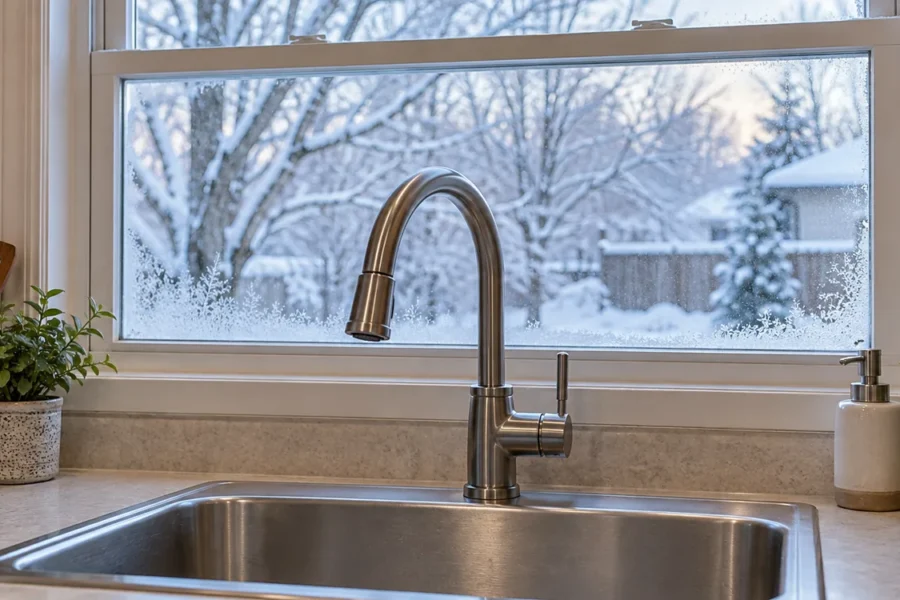
A sudden trickle or no water during freezing weather can be a sign of a frozen supply pipe, especially at a fixture near an exterior wall or in an unheated area. It is not proof. Check for urgent hazards first, compare a few accessible fixtures, and look for an official water-service notice before deciding whether the next call belongs to the utility, building manager, or a plumber.
Featured image: AI-generated illustration in a photographic style, not a photograph of an inspected installation.
This guide is for a change in water flow during or shortly after cold weather. It helps you collect useful evidence and respond safely; it is not a DIY thawing procedure. For a problem unrelated to freezing weather, start with our broader no water coming out of faucets guide.
First: leaks and electrical hazards take priority
Stop ordinary troubleshooting if water is spraying, a wet patch is spreading, a ceiling is sagging, or water has reached electrical equipment. Keep people away from the affected area. Do not walk into standing water, touch wet switches or appliances, or reach a breaker panel through a wet area. Seek emergency help if there is an immediate danger.
If you have a clearly identified, accessible customer-owned water shutoff and can reach and operate it safely, use it to limit an active plumbing leak. Otherwise contact the utility, building manager, or emergency plumber for isolation help. Do not force a frozen or seized valve or experiment with shared building controls, curb stops, or fire-protection equipment.
A visible split or unusual bulge in a pipe also deserves prompt professional assessment, even if little water is escaping. Do not squeeze, tap, or heat the suspect section to test it. You do not need to prove ice is present before responding to visible damage.
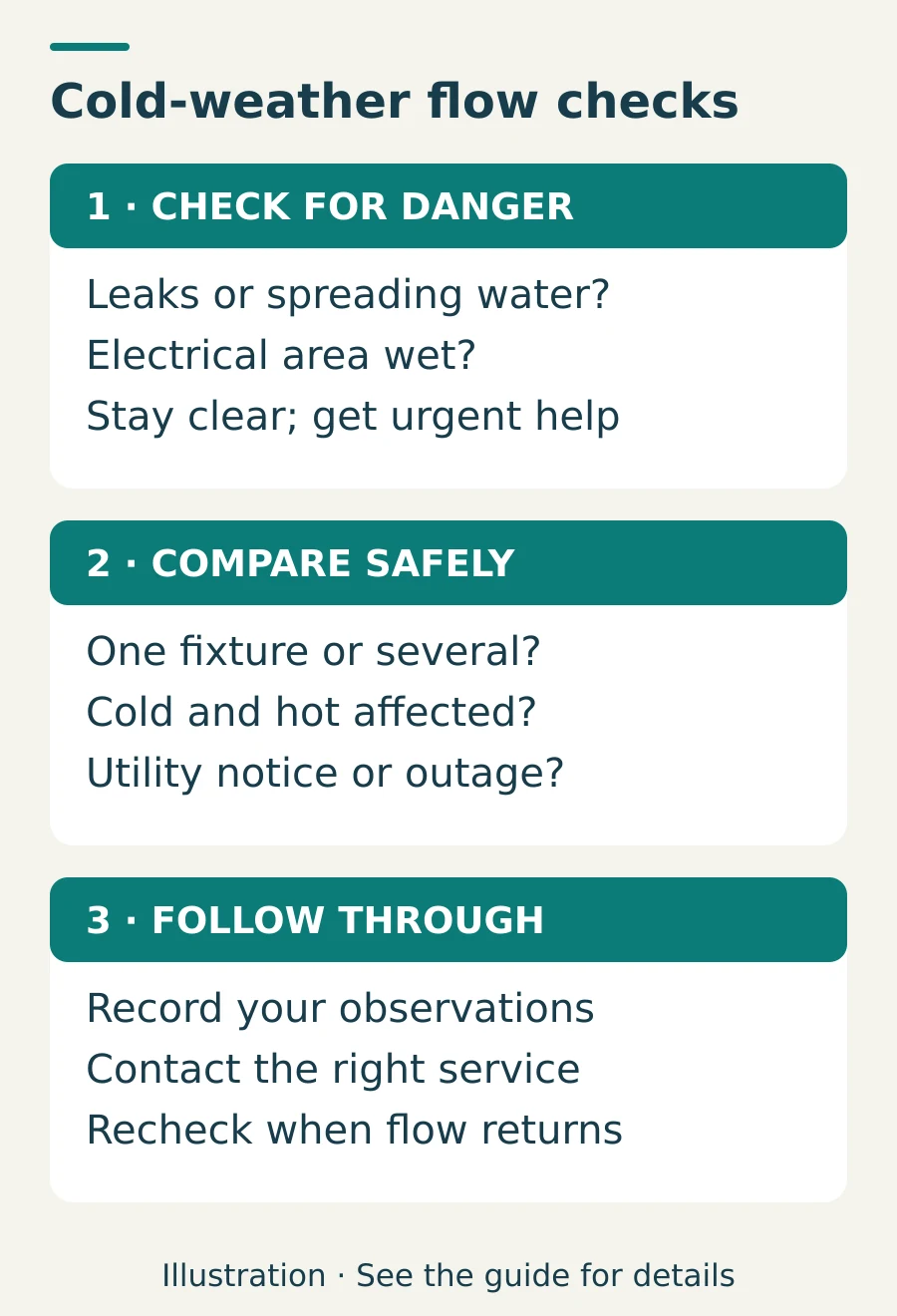
Compare a few fixtures, without turning the house into a test
Use a small number of safe, accessible outlets. Note what happens during a brief normal opening, then return the faucet to its normal position unless your utility or plumber directs otherwise. Do not repeatedly flush toilets, start a dishwasher, or run laundry to see whether the supply works.
For each fixture, record cold and hot flow separately where its controls allow a meaningful comparison. Be cautious of hot water and do not put your hand into the stream to test temperature. Some mixing fixtures cannot isolate the two supplies clearly; record that limitation rather than interpreting the handle position as proof.
- One fixture affected: a local branch or the fixture itself may be involved. A normal faucet elsewhere does not prove the affected one is frozen.
- Several fixtures in the same area: note their locations. They may share a vulnerable route, but concealed pipe routing needs confirmation.
- Cold and hot flow both weak across the home: investigate a broader supply interruption as well as possible freezing near the service entry.
- Only the hot side affected: record whether this happens at one fixture or several. Do not assume that the water heater needs to be replaced or shut down.
San Antonio Water System recommends comparing multiple faucets and the home’s heating history during freeze-related outages. The value is in narrowing the pattern, not making a definitive remote diagnosis.
A useful observation sounds like this
“The kitchen cold side slowed this morning after an overnight freeze. Its hot side and both bathroom supplies still have normal flow. The kitchen is against an exterior wall. I do not see water beneath the cabinet.”
That short description contains timing, location, scope, and a visible leak check. “There must be a frozen pipe” contains a conclusion but leaves out the information a service provider needs.
Check the utility notice, then add neighborhood context
Read your water supplier’s official outage or service-alert page, or call its published service number. If you live in a managed building, check for a building notice and contact management. A planned repair, main break, or building-wide shutoff can coincide with freezing weather.
Ask a nearby neighbor whether their water is working, if doing so is easy and safe. Philadelphia Water Department uses a neighbor comparison as an initial clue. Treat it as context: nearby properties can have separate service lines, different exposures, or different building systems.
- Several nearby homes have lost water: a utility interruption becomes more plausible. Check the official notice rather than relying only on a neighborhood post.
- Your neighbor has water but you do not: the problem may be on your service or within your building, but freezing is only one possibility.
- No notice is posted: a new incident may not yet be listed. Contact the provider if the whole property is affected or the supply boundary is unclear.
If your home uses a private well, a power, pump, or well-system problem may need a qualified well professional. Do not open electrical controls or assume that municipal-outage advice applies to that system.
Look for accessible clues, not a hidden ice blockage
From a dry, safe location, inspect the affected sink area and any visible supply plumbing in places already known to be cold. Use a flashlight. Look for frost on exposed pipe, fresh moisture, a split, an unusual bulge, or staining beneath a pipe route.
The American Red Cross describes a trickle at a faucet as a reason to suspect freezing, with exterior-wall runs and the service-entry area among possible locations. Suspicion should lead to timely assessment, not forceful testing.
Do not enter a flooded crawl space, climb into an unsafe attic, open a curb-meter box, cut a wall, or remove pipe insulation from a damaged-looking section. A pipe can be inaccessible without the problem being yours to locate personally.
Which clues are stronger?
A close sequence of severe cold, loss of heat, localized flow loss, and visible frost near the affected run makes freezing more plausible. None of those observations alone establishes the exact blockage location or proves that the pipe is intact.
Moisture alone can have other causes. A drain odor, gurgling sink, or unfamiliar pipe noise does not confirm that the pressurized water supply is frozen. Keep drain symptoms separate from supply-flow observations when describing the problem.
Who should you call, and what can you do while waiting?
- Water utility: a wider neighborhood interruption, whole-property loss with an unclear cause, a meter-related concern, or uncertainty about who owns the affected service section.
- Building manager or landlord: a rental, shared supply, inaccessible building controls, or multiple units affected. Report visible leakage urgently.
- Licensed plumber: suspected household freezing, a damaged or leaking private pipe, a localized loss of flow with no known service interruption, or a shutoff that cannot be operated safely.
- Qualified well service: a private-well property with broader loss of water, especially when power or pump behavior changed.
While arranging help, keep the home’s normal heating operating if it is safe. Open an accessible sink cabinet to room warmth where appropriate, first securing cleaners and other hazards away from children and pets. Keep access to your known household shutoff clear, without testing an uncertain or stiff valve.
Ask the service provider what position to leave an affected faucet in for your circumstances. General prevention instructions about dripping are not a substitute for advice about a pipe that may already be frozen or damaged.
Do not use flames, boiling water, heat guns, hair dryers, portable heaters, or improvised electrical equipment to thaw suspected piping. Do not add antifreeze to drinking-water lines or force frozen valves. Water-heating, hydronic-heating, and fire-protection systems need equipment-specific handling by the responsible professional.
Have these details ready for the call
- When normal flow was last observed and when the change began.
- Which fixtures are affected, and whether cold, hot, or both changed.
- Whether household heat or electrical power has failed.
- Any official utility notice, building notice, or neighbor information.
- Any visible frost, moisture, pipe damage, or unsafe electrical area.
- Whether the supply is municipal or private well, and whether your customer-owned shutoff is known and safely accessible.
Take a photo only from a safe position. Do not delay an urgent leak response to gather a complete record.
When water returns, check for leaks before calling it resolved
Flow returning does not prove that a pipe escaped damage. Revisit safely accessible areas near the affected fixtures and below the suspected pipe route. Look for new drips, wet insulation, stains, puddles, or a water sound that was not there before.
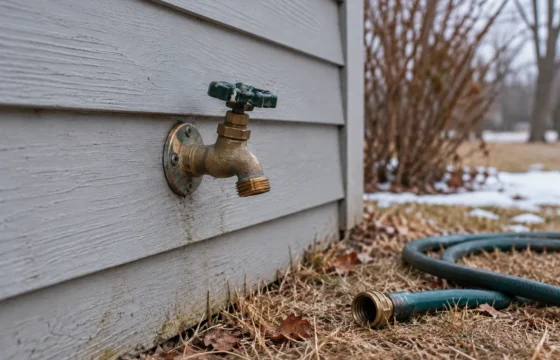
Philadelphia Water Department advises checking for pipe and meter damage after thawing. If an outdoor faucet was affected, inspect its indoor side during its next attended use; our outdoor faucet leak guide explains why leak location matters.
If you find active leakage, stop using the affected plumbing and follow the urgent-response steps at the top of this guide. If the utility has issued a boil-water, do-not-use, or flushing notice, follow that notice: restored pressure alone does not settle water-quality questions.
Once the immediate problem is resolved, record the confirmed cause and repair. Use the frozen-pipe prevention guide to address the vulnerable location before the next cold snap. A recurring restriction deserves investigation even when it disappears every afternoon.
Questions about possible frozen pipes
Can a frozen pipe still let some water through?
A trickle can occur with a suspected freeze, but low flow also has other causes. Compare the fixture pattern, weather and heating history, and service notices. Do not use the amount of flow to judge whether a pipe has cracked.
Can pipes freeze without visible frost?
Yes. Much of the plumbing may be concealed, and visible frost is not required before you seek help. The absence of frost on the pipe you can see does not rule out a problem elsewhere.
If the neighbors have water, does that confirm my pipes are frozen?
No. It makes a broad outage less likely, but a private service issue, closed control, or another household problem remains possible. Give the utility or plumber the observations rather than a presumed diagnosis.
Should I wait for warmer weather?
Do not rely on warming weather as the entire plan. A damaged pipe can begin leaking as flow returns. Arrange assessment promptly when freezing is suspected, and act urgently on leaks or hazards.