High water bill but no visible leak? First compare billed water use, billing days, and meter-reading type with earlier bills. Then review household and outdoor use before checking the meter during a no-use period. A higher dollar total alone does not establish a leak or show where one is located.
For other symptoms, use the plumbing troubleshooting guide for water bills and meters to choose the appropriate next check.
High water bill but no visible leak: separate cost from water use
Put the current bill beside the previous bill and, if available, the same season last year. Highlight the consumption figure, units, service dates, and line items. Comparing only the final amount can send you searching for a plumbing fault when the difference is partly a rate, fee, or billing-period change.
EPA’s guide to understanding water bills explains common consumption units and billing structures. Check your own utility’s definitions: gallons and CCF are not interchangeable. One CCF represents approximately 748 gallons.
| Question | What to compare | Why it matters |
|---|---|---|
| Did consumption rise? | Water-use quantity in matching units | Separates usage from other charges |
| Was the period longer? | Days between reading dates | A longer period may contain more total use |
| Was the reading estimated? | Reading labels and previous estimates | An actual reading may reconcile earlier estimates |
| Did another line item change? | Water, sewer, fixed charges, adjustments | The total may change without the same change in gallons |
Compare gallons per day, not only the bill total
Resolve unclear bill labels before calculating. Use the gallons, cubic feet, and CCF/HCF comparison to choose the right quantity. If either period is estimated, follow the actual-versus-estimated reading example before treating a later correction as a new increase in use.
| Previous → current | What changed | Start with |
|---|---|---|
| 4,200 gal / 28 days → 5,250 gal / 35 days | 150 → 150 gallons per day | Service period and charge comparison. |
| 4,200 gal / 28 days → 5,880 gal / 28 days | 150 → 210 gallons per day, a 40% increase | Activity history, automatic use and a suitable meter observation. |
| Same service days and gallons; amount due rises | The dollar total changed without a measured volume increase | Rate, fixed fee, sewer and account-adjustment questions. |
Keep past use and current flow separate
These numbers are examples, not a household benchmark. A bill describes a past period; a meter check describes the interval you observe now. Put both dates beside the result before concluding that a current quiet meter explains a past spike.
For the real meter demonstration and a start/end checklist, use the water meter leak test. For the full calculation, use compare water bills by gallons per day.
Calculation: billed gallons ÷ service days = average gallons per day. Use the daily water-use comparison calculator to calculate both periods using each bill’s quantity, unit, service days, and reading type. It compares water volume, not the dollar amount. These daily averages describe the entered periods; they are not a household target, a measured leak rate, or proof that all water use was intentional.
Now compare occupancy and activities. Guests, a new irrigation schedule, pool filling, extra laundry, or a change in time spent at home can explain some use. Write down dates instead of relying on memory. If a smart-meter portal is available, compare the timing of the change with those events.
Keep units consistent throughout the worksheet. If one screen reports gallons and the bill reports CCF, convert before comparing. Do not subtract a meter’s cumulative lifetime total from a monthly consumption number; these are different measurements.
Look for use that is easy to miss
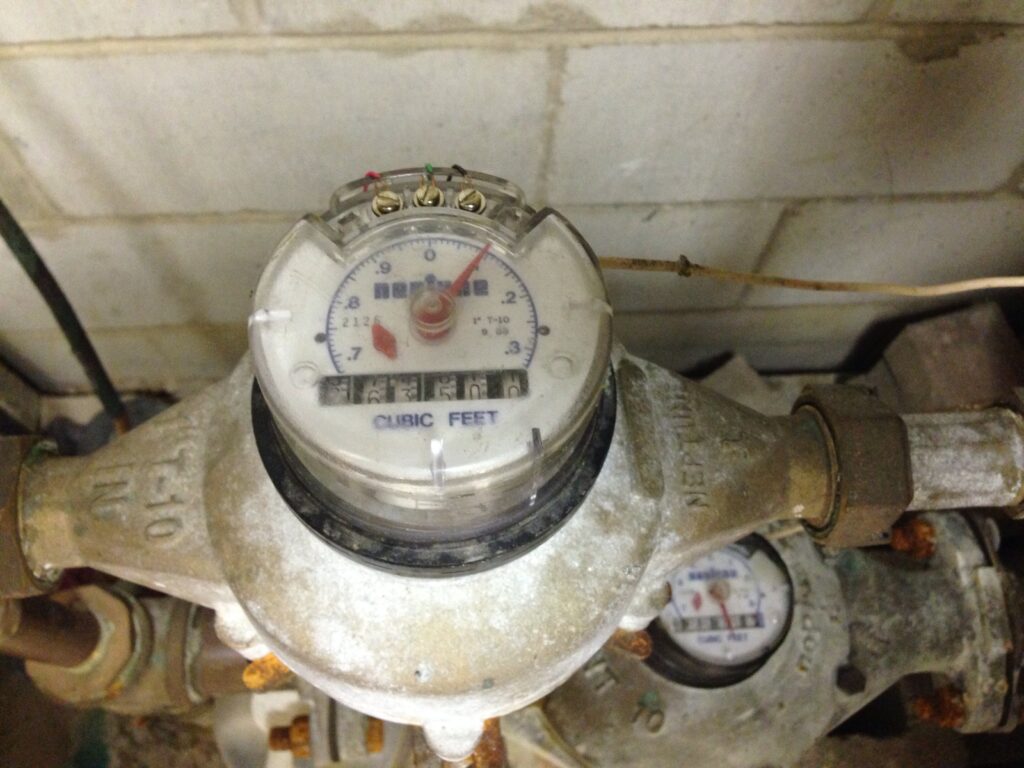
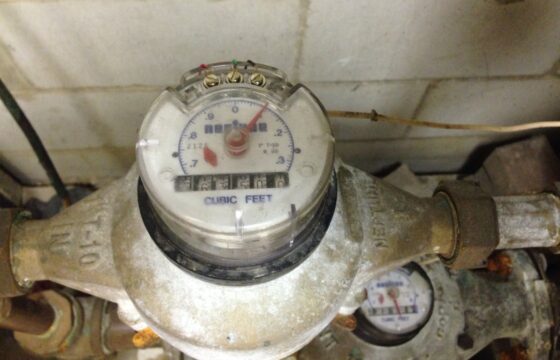
Use our meter photo guide and no-use test to identify the register and indicator. First compare the bill’s dates and quantity using gallons per service day. Read only an accessible display; do not disturb meter wiring or utility-owned valves.
Watch a utility explain hidden water waste
Video by Thornton Water Conservation, linked from the EPA’s household leak-check resources. It provides context for investigating overlooked water use; it does not diagnose your property. Open the source video on YouTube if the player does not load. This is third-party footage, not a repair or inspection performed by The Home Fix Guide.
Before testing, write down any scheduled irrigation, appliance refill, or water-treatment cycle that may occur. Do not disable essential equipment to create a no-use period. Then follow the meter-check instructions below, keeping actual observations separate from suspected causes.
For specific clues, check whether an outdoor faucet keeps leaking or a sprinkler head passes water while its zone should be off. Inside the home, water entering an unused washing machine needs a different check from water on the laundry floor.
Walk through accessible areas and listen as well as look. A toilet can refill briefly between visits. Outdoor watering may happen before you wake. An appliance can draw water automatically. Record equipment that may operate during a test, including ice makers, water-treatment equipment, and irrigation controllers.
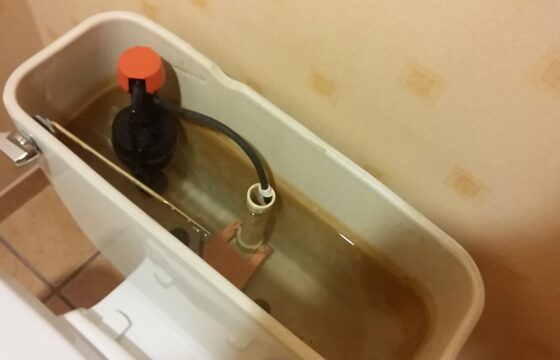
For a conventional accessible toilet, our toilet dye test can reveal tank-to-bowl leakage. For a visible sink drip, use the faucet shutoff troubleshooting guide. For water from a shower head after use, compare residual drain-down with a continuing shower drip before treating it as ongoing water loss. These observations do not identify an underground leak, and you should not open walls or dig based on the bill alone.
If water is approaching electrical equipment, a ceiling is bulging, or a substantial leak is active, stop the routine investigation and seek appropriate urgent help. Do not enter standing water near electrical equipment. The bill can wait while the immediate hazard is addressed.
Check current use with the meter
Our water meter leak test explains how to record readings during a period when no water should be used. Follow utility access rules, account for automatic appliances, and do not operate utility-owned valves. If your meter is inaccessible or shared, ask the utility or property manager how consumption is measured.
| What the bills show | What the no-use meter check shows | What to do next |
|---|---|---|
| Daily use increased | Meter also changes during a controlled no-use period | Ongoing water use, an automatic device, or a leak remains possible. Continue fixture-by-fixture checks or arrange diagnosis. |
| Daily use increased | Meter is stable during this one check | Do not dismiss the bill increase. Seasonal use, an intermittent toilet refill, irrigation, guests, or an earlier event may not be active during the observation. |
| Daily use is similar | No unexpected current flow | Focus on billing days, rates, sewer charges, fixed fees, and account adjustments rather than assuming a hidden leak. |
| Reading type or units are unclear | Result cannot be interpreted confidently | Ask the utility to explain the reading type, meter unit, and any correction before estimating water loss. |
A change during a properly controlled no-use test suggests water is moving through the meter, but does not locate the source. A stable reading during one test cannot rule out an intermittent fault or explain a past spike. Keep the test’s dates and readings so the utility can compare them with its records.
EPA’s leak-check guidance recommends comparing meter readings across a no-use interval. Use a test as one piece of evidence, alongside the bill and activity history, rather than treating it as a complete diagnosis.
Does the billed reading match your meter?
Check the bill’s ending meter reading, not its period consumption or amount due, against a dated photograph of the same accessible meter. Confirm the meter identifier, register unit, digits, and any multiplier with your utility. An estimated reading is not a physical observation from that date.
EBMUD’s high-bill guidance notes that a current reading normally exceeds the reading on an earlier bill because water has been used since then. That comparison assumes the same unchanged register and scale. A higher number alone does not prove a leak or an incorrect bill.
- The current reading is higher: record both dates. The difference includes water used after the billed reading; it is not automatically unexplained loss.
- The current reading appears lower or the identifiers differ: ask the utility to reconcile the records, including any meter replacement, register rollover, or reading-scale difference. Do not diagnose a defective meter from that comparison.
- You cannot confirm the unit or register: keep the photograph and ask which digits to compare. Use the meter photo guide for orientation without opening equipment or operating a utility valve.
Give the utility the bill’s reading date, ending reading, reading type, and your current dated photo. Once the records are reconciled, use the bill-and-meter result table above to choose the next investigation. If your question is meter accuracy, a bucket check answers a different question from a no-use leak test.
Why was the bill high while nobody was home?
First put your departure and return dates beside the bill’s service dates. A bill delivered during a vacation may cover water used before you left. If the period overlaps occupied and vacant days, its average cannot show how much water was used during the absence alone.
For available daily or hourly meter history, ask the utility which entries are measured and whether the chart is delayed. Compare the actual absence dates with irrigation schedules, water-treatment cycles, pool autofill, and any visits to the property. An empty house does not necessarily have zero automatic water use. A repeating pattern is a clue to investigate, not proof that a particular appliance is responsible.
| Evidence | What to record |
|---|---|
| Bill | Service dates, reading type, billed volume, and changed charges. |
| Absence | Dates nobody was home and which automatic systems remained scheduled. |
| Current observation | Meter-test times, readings, and any water-using event during the test. |
If historical readings are unavailable, tell the utility that the timing is uncertain. A quiet meter after you return cannot establish what happened while you were away. EBMUD’s high-bill guidance notes that a water-loss event can end before the bill arrives. Persistent unexplained flow now deserves prompt investigation; do not wait for another statement if you see damage.
Use a simple investigation log
Download the one-page fillable investigation worksheet (PDF, 92 KB)
Save the PDF before filling it in a compatible PDF reader, or print the blank page. If your browser preview cannot fill or save the fields, download the file and open it in a PDF reader. The worksheet does not calculate values or send your entries to this website.
Keep the two billing periods, current meter observation, and follow-up questions in one record. Select and copy the template below into your notes before contacting the utility or a plumber. Keep unknown readings marked as unclear rather than estimating them.
Show a copyable water-bill investigation template
PREVIOUS BILL
Service dates: ___ to ___ | Days: ___
Billed quantity: ___ | Unit: ___ | Actual / estimated / unclear: ___
Average gallons per day: ___ | Amount due: $___

CURRENT BILL
Service dates: ___ to ___ | Days: ___
Billed quantity: ___ | Unit: ___ | Actual / estimated / unclear: ___
Average gallons per day: ___ | Amount due: $___

CURRENT METER OBSERVATION
Date: ___ | Start time: ___ | End time: ___ | Meter unit: ___
Start reading: ___ | End reading: ___
Result: increased / stable this interval / not checked / unclear
Automatic equipment or any water use during the check: ___

HISTORY AND NEXT ACTION
Activity, absence dates, irrigation, appliance cycles, fixture clues: ___
Questions about readings, changed charges or usage history: ___
Next action, utility reference number and follow-up date: ___
Use the daily water-use calculator for the bill comparison and the meter observation calculator for a recorded interval. This record does not calculate values or diagnose a leak. Keep your completed copy private; you do not need to include an account number or password.
| Record | Example entry |
|---|---|
| Billing period and consumption | Write exact dates, units, and quantity |
| Reading type | Actual, estimated, or unclear |
| Known change | Irrigation schedule changed on a specific date |
| Meter observation | Start/end readings, duration, automatic equipment status |
| Fixture finding | Toilet refilled without use; dye test result recorded |
| Follow-up | Utility reference number and repair date |
Use a secure folder for bills and account details. Send only information relevant to the investigation. A plumber usually needs the symptom, location, timing, and access details, not your utility account password.
What to ask the utility
Ask whether the current and prior readings were actual or estimated, whether the meter identification matches the property, and whether the account shows unusual hourly or daily use. Ask which charges changed and how any sewer component is calculated. The answer depends on local billing rules.
If a leak is confirmed, ask whether a leak-adjustment program exists, what repairs qualify, what documents are required, and whether there is a deadline. Do not assume a credit will be issued. Keep the repair invoice and before/after observations. Ask how the disputed amount and payment deadline should be handled while the investigation is open.
When to hire a plumber and what a quote should cover
Professional diagnosis is appropriate when unexplained meter movement persists, you cannot safely isolate a suspected fixture, or there are signs of concealed leakage. Give the plumber your log. Ask whether the visit covers visible inspection only or specialized leak detection, and whether any opening or excavation requires separate approval.
The bill increase is not a repair estimate. A leaking toilet seal, an irrigation fault, and an underground supply problem involve different work. Request a written scope, service-call charge, diagnostic fee, and explanation of what restoration is included. There is no reliable single national price for “a high water bill.”
Frequently asked questions
Does a doubled bill prove there is a hidden leak?
No. Compare consumption, billing days, and charges first. If daily consumption also increased without an explanation, investigate current use and contact the utility.
The meter is still now. Why was the bill high?
The extra use may have occurred earlier or intermittently. One quiet interval does not reconstruct the whole billing period. Ask for available usage history.
Can I compare my total with a neighbor’s?
Only cautiously. Occupancy, irrigation, billing periods, and charges may differ. Your own adjusted history is a better starting point.
Should I buy a leak detector immediately?
Not just because the bill increased. First compare billed volume and service days, then investigate current unexplained use. A new device cannot reconstruct water use before it was installed, and an alarm does not repair a confirmed fault.
- You want to know whether water is being used now: begin with the no-use meter check and its result guide, if your meter is individual and safely accessible. Ask the utility about available usage history before buying another monitor.
- You want an alert for water on a cabinet base or floor: a spot sensor responds where water reaches its contacts. It may miss a toilet leaking into its bowl or an underground pipe leak. Use the sensor checklist for local alarms, phone alerts, probes and required hubs to match the location and how you need to receive an alert.
- You want ongoing flow information: ask which pipe or meter a flow monitor covers, whether irrigation is included, and what installation is required. An unusual-use alert still needs investigation; it is not a confirmed leak location.
EPA WaterSense distinguishes moisture detection from flow monitoring. Choose the question first, then the equipment; neither type replaces reviewing the bill or fixing the cause.
See our editorial policy for how these researched guides are prepared.
Illustrative faucet photo: Imani on Unsplash. No service visit or utility inspection is represented.