If the shower stays cold while nearby sinks get hot, compare the fixtures before blaming the water heater. The shower’s valve, hot-water supply, or temperature control may need attention. Hot water at a sink shows that hot water reaches that sink; it does not prove the shower receives the same supply under the same conditions.
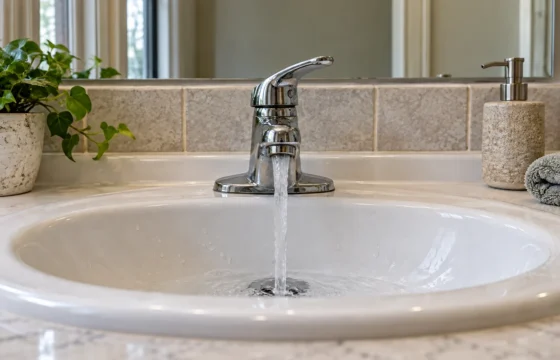
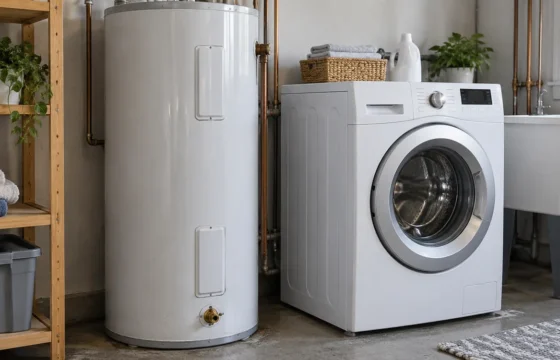
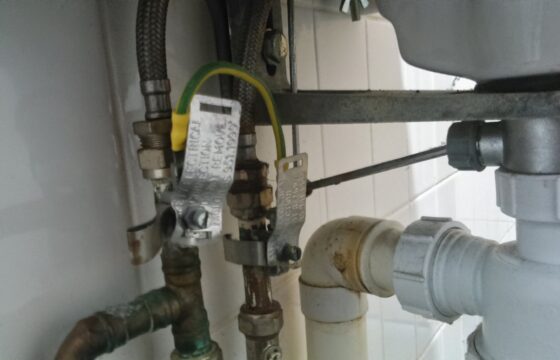
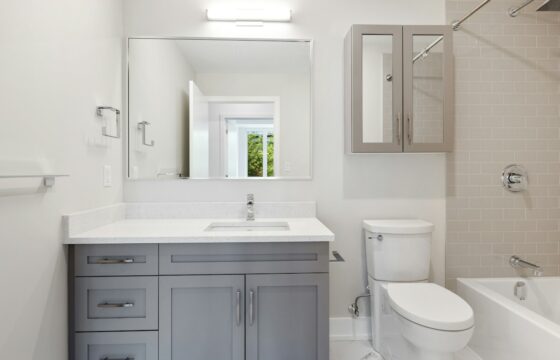
Featured image: AI-generated illustration in a photographic style, not a photograph of an inspected installation.
This guide is for US homes with a shower supplied by household hot and cold plumbing. It covers safe observation, not opening a shower valve. For a wider outage, use our no hot water troubleshooting guide.
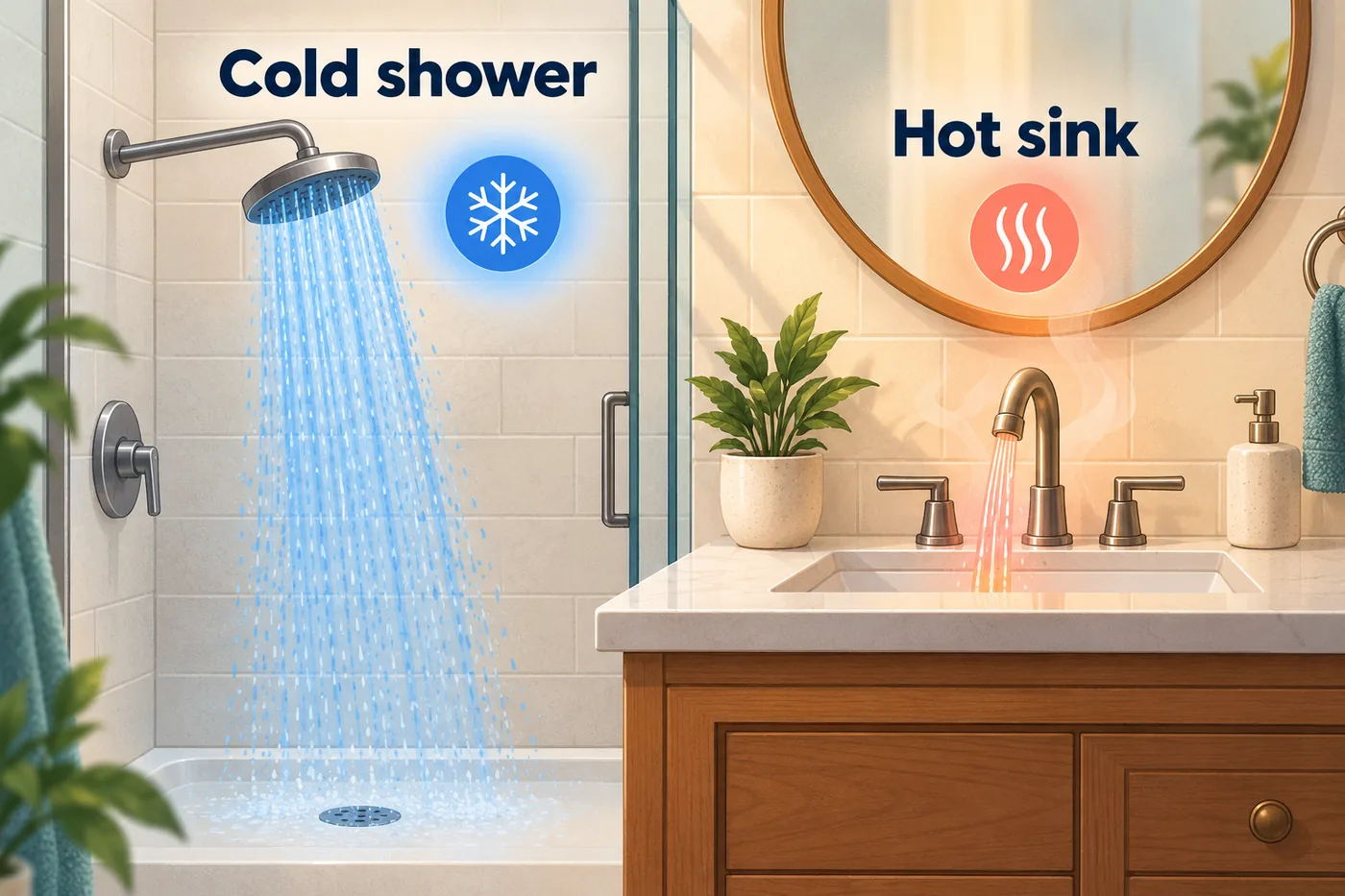
First, confirm which pattern you have
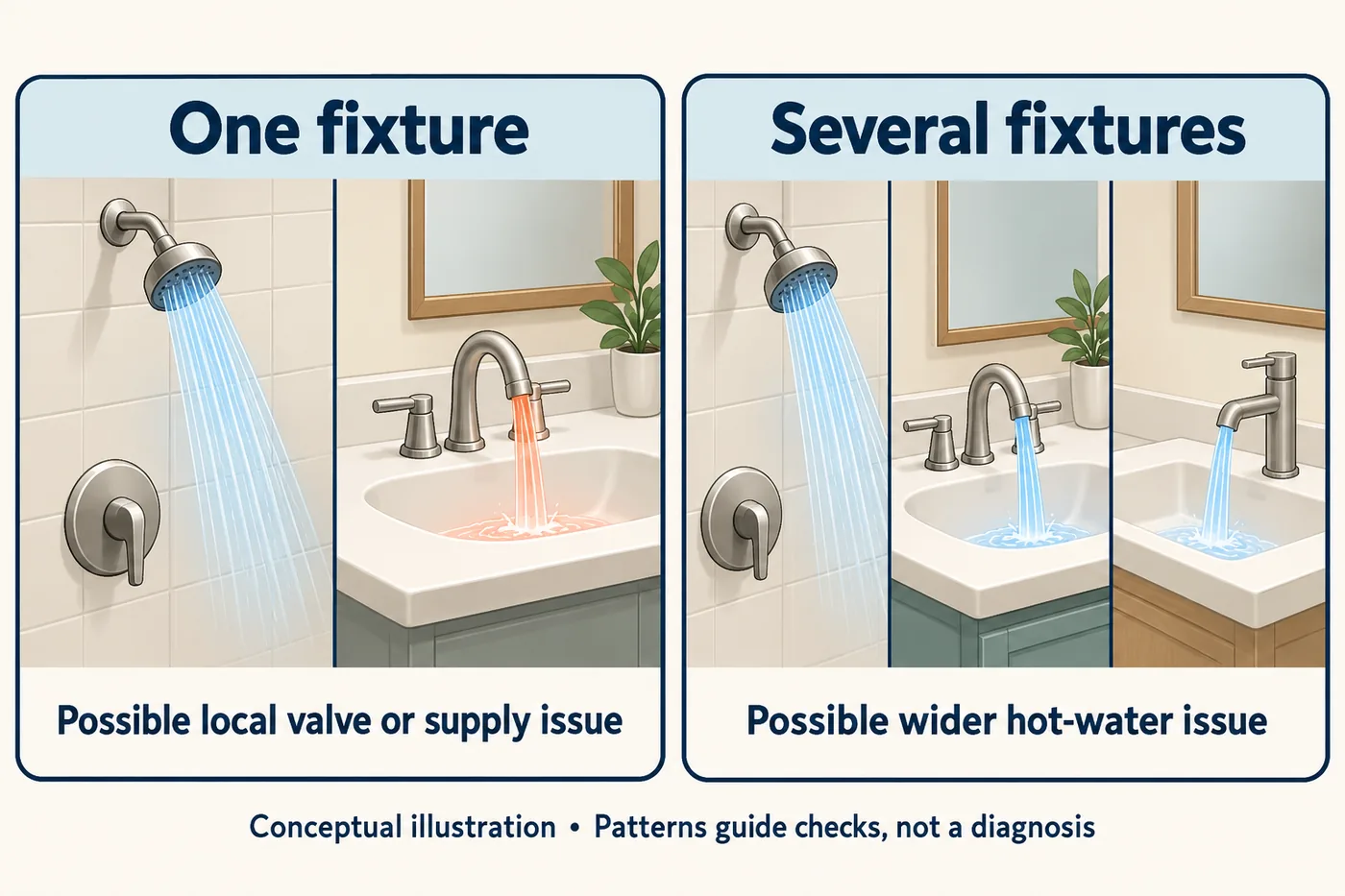
Use observations from normal use where possible. If you need a brief comparison, operate only the ordinary faucet controls, keep out of the stream, and pause other household hot-water use. A safe, non-contact observation cannot establish an exact water temperature; leave temperature measurement to a professional if you cannot do it without exposure.
| What you notice | What to do next |
|---|---|
| One shower stays cold; nearby and other sinks get hot | Record the shower model and recent work; ask for a local valve and supply check. |
| Shower becomes lukewarm but never reaches its former temperature | Report limited temperature separately from completely cold water. Model-specific calibration may matter. |
| Shower starts normally, then cools; sinks also lose warmth around the same time | Use the hot water runs out quickly guide to compare demand and recovery. |
| The hot handle position also produces little or no flow | Report both symptoms. See weak hot flow with normal cold flow. |
| Hot and cold settings both produce weak shower flow | Use the shower-only low-flow guide. |
Do not leave taps running for a long time to prove the problem. Record how long you normally wait for warmth and whether that changed. A distant sink may take longer than a nearby one, and some homes have separate heaters or a central building system. If the water eventually reaches its usual temperature at normal flow, see the hot-water delivery delay guide for that waiting pattern.
What can cause hot sinks but a cold shower?
A valve or balancing component is not working normally
Many single-handle shower valves control the mixture of hot and cold water inside the wall. Some include pressure-balancing components; others use thermostatic control. In its cold-only or hot-only shower guidance, Moen identifies restricted balancing components, inadequate supply, and calibration as possible causes depending on the model.
This is a reason to identify the valve, not to order a universal cartridge. The brand on the showerhead may differ from the brand of the concealed valve. Photograph the handle, trim plate, and any visible brand or model marking; check installation paperwork. A plumber or the valve manufacturer can use those details to determine the correct service procedure.
A temperature limit or installation detail needs checking
A shower that has always been too cool, or changed immediately after a handle or cartridge replacement, needs a different history from one that failed after years of normal use. Tell the installer what changed and when. Moen’s mixing-temperature guidance includes installation, handle positioning, supplies, and calibration, with different instructions for different valve families.
Some valves have a rotational limit stop that restricts maximum outlet temperature. Delta’s model-specific limit-stop instructions (PDF) explain that inlet-water conditions affect the result and require temperature verification. Do not remove the stop, copy another model’s adjustment direction, or raise the water-heater setting to compensate. Have the correct valve checked and calibrated without defeating its safety function.
Hot water is not reaching this valve normally
A working sink does not exclude a restriction or service issue on the shower’s branch. This is especially relevant after plumbing work or when the flow changes sharply as the shower handle moves toward hot. Supply testing, opening concealed service stops, flushing a valve body, and disconnecting lines belong to a qualified plumber. Do not reopen a valve that someone may have closed deliberately.
The tankless exception: normal sinks do not clear the heater
A tankless heater needs a minimum hot-side flow to stay operating. Rinnai’s FAQ explains that low flow can cause its units to shut off. A mixed shower and a sink opened farther toward hot can create different demands, so one outlet working is not conclusive.
If you already notice that warmth changes when another hot tap runs, include that detail in the service report. Do not keep another faucet running as a workaround. Record any accessible heater display message and let the installer check activation, flow, and the shower valve against the exact models. Do not remove flow restrictors, alter gas controls, or open the heater as an experiment.
What to tell the plumber or property manager
- Which shower is affected and which sinks still get hot
- Whether it is cold from the start, limited to lukewarm, or starts hot and cools
- Whether flow also weakens when the handle moves toward hot
- When it began, and whether a repair, remodel, or supply interruption preceded it
- Valve photos, heater type if known, and any visible error message
- Whether anyone has experienced an unexpected hot burst
Example: “The hall shower has been cold since the trim was replaced yesterday. Both bathroom sinks still get hot. Shower flow looks normal. Please check the installed valve model, hot supply, and control setup.” This is an example report, not a repair case performed by this website.
Common questions
Can a clogged showerhead cause no hot water?
A restricted head primarily changes flow. With a tankless system, inadequate hot-side flow can also affect activation. That possibility does not prove the head is the cause, and cleaning it does not repair a failed mixing valve. Follow the symptom comparison above rather than replacing parts at random.
Should I replace the water heater if only one shower is cold?
Not on that observation alone. Have the local valve and supply pattern checked first, while accounting for tankless activation or separate hot-water systems. Replacing a heater without confirming the fault may leave the shower problem unchanged.
Can I keep using the shower?
Do not use it if temperature is unpredictable or unexpectedly hot. When it stays cold without other warning signs, use another working bathing option while arranging service. Renters should contact management rather than opening shared equipment or concealed valves.
Sources and scope
The linked Moen, Delta, and Rinnai documents support the equipment-specific distinctions above. This is a source-based homeowner observation guide, not a professional inspection or an account of hands-on testing. It does not provide cartridge replacement, electrical testing, or gas-service instructions. Use the exact product manual and qualified service for repairs.