Multiple slow drains can point to a restriction in a shared branch, the building drain, or the sewer service line. They do not automatically prove that the main sewer line needs replacement. The useful clues are which fixtures are affected, whether one fixture makes another react, and whether wastewater is rising.
If water is already backing up, stop household water use and start with what to do when water backs up into a tub or shower. This guide helps organize a multiple-drain problem before a plumber, sewer utility, or septic service provider investigates it.
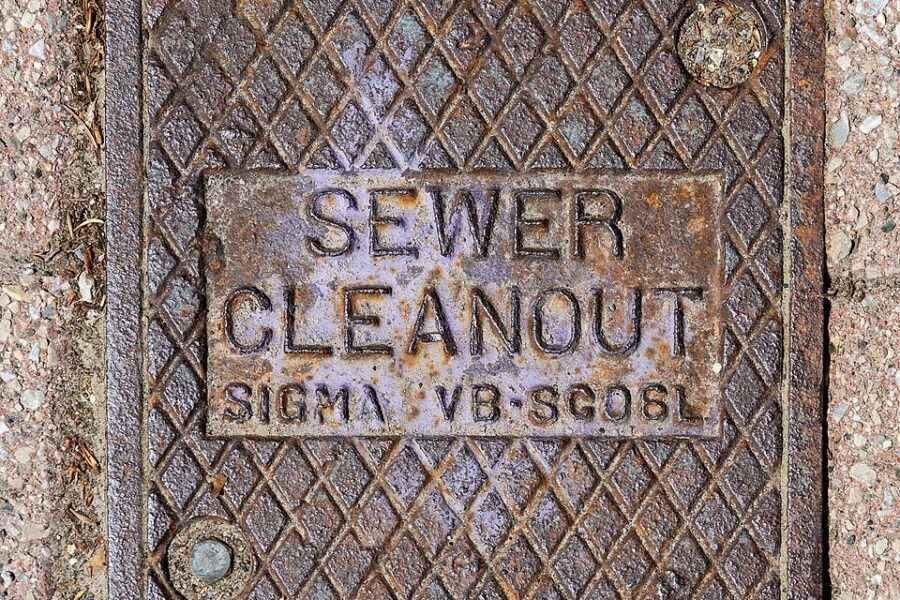
Featured photo: closed sewer cleanout cover in Amherstburg, Ontario, by Chris Woodrich, CC BY-SA 4.0. Access designs and ownership vary. Leave covers closed; this reference does not identify your home’s layout. Reference media may be resized for display.
Several drains are a pattern, not a pipe diagnosis
A slow sink in one bathroom and a slow tub in another may share some pipework, but their room locations do not reveal where they join. Two fixtures can also have separate local problems. Describe the combination without declaring the location of the blockage.
| What you already noticed | Possible area to investigate | What it does not prove |
|---|---|---|
| Only one shower, tub, or sink is slow. | A local opening, trap, or fixture drain. | That the rest of the line is definitely clear. |
| Two fixtures in the same bathroom slow down together. | Their shared branch or another common influence. | That the underground sewer service is blocked. |
| Drains in several areas are slow and a low fixture reacts. | A common downstream path. | The exact blockage location or ownership boundary. |
| A washer discharge or toilet flush makes water rise elsewhere. | A cross-fixture backup requiring prompt help. | That the fixture receiving water caused the problem. |
| Several nearby properties report trouble during rain. | A possible wider sewer issue. | That the utility is responsible for every affected private pipe. |
These are working possibilities. Winterset’s sewer department lists multiple affected drains, gurgling, odors, and sewage at floor drains among warning signs. Its contact process applies locally; use the reporting procedure for your own sewer provider.
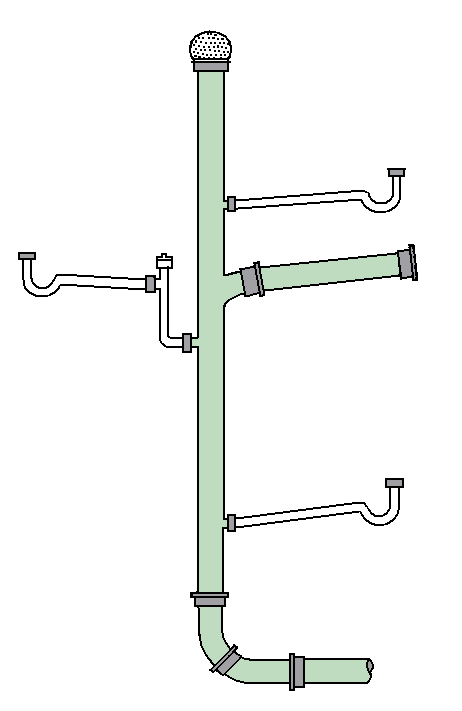
What people mean by “main sewer line”
Household drains join as wastewater leaves fixtures. A branch serves a group of fixtures; the building drain collects waste farther along; a service line or lateral connects the property to a public sewer. A septic home routes wastewater to an onsite system instead. Terminology and responsibility boundaries vary by location.
A restriction after a junction can affect more than one fixture upstream. That is why cleaning a sink stopper may not resolve a tub reacting to toilet use. The connection is a reason to investigate the shared route, not evidence that every affected fixture has failed.
NYC DEP’s sewer backup guidance distinguishes the public sewer from the property’s service line. That is a useful distinction to ask about elsewhere, but do not apply New York’s reporting deadlines, response times, or ownership rules to another city.
Possible causes to discuss, without selecting a repair remotely
A partial obstruction may involve accumulated material, roots entering a damaged joint, or deteriorated pipe. A drainage or venting arrangement may also need assessment, especially after changes to the plumbing. The sound of gurgling alone cannot separate those explanations.
Oatey’s sewer-line guidance describes wipes, grease, root intrusion, scale, and related warning signs. Those are examples of possible causes, not a basis for choosing root chemicals, high-pressure jetting, or excavation before the actual condition is known.
When several fixtures changed immediately after renovation, include the work details. When a previously cleared line slows again, include how long the improvement lasted. Both histories can help direct the inspection without proving what caused the current fault.
Make a fixture record without stress-testing the system
Use observations already made during ordinary use. Do not run every faucet, flush repeatedly, or start a washer to demonstrate a suspected shared restriction. If the system is struggling, adding a large test load can create an overflow.
| Record | An example of useful wording |
|---|---|
| First affected fixture and time | “Downstairs tub became slow yesterday evening.” |
| Other fixtures already noticed | “Bathroom sink is also slow; kitchen was normal earlier.” |
| Direction and trigger | “Water rose through the tub outlet after the toilet was flushed.” |
| Water appearance and spread | “Water stayed inside the tub; no floor contact observed.” |
| Recent changes | “Sink drain replaced last week; no other work known.” |
| Prior treatments | “Chemical opener used Sunday; product name available.” |
| System and access | “Municipal sewer; known cleanout beside garage, cap untouched.” |
These are illustrative descriptions, not reports from a tested house. If you do not know whether a drain connects to septic or sewer, say so. A utility bill, property record, or building manager may establish the system without opening anything.
When to stop using water
Stop household water use if wastewater rises, a toilet bowl climbs unusually, or a low drain starts overflowing. Also pause routine testing when several fixtures are slowing together. Avoid flushing toilets and running laundry or the dishwasher while arranging advice. If safely accessible, use normal controls to stop appliances; do not enter water to reach them.
Do not assume an upstairs fixture is safe simply because it has not overflowed. It may discharge into the same affected route. A water-supply shutoff can stop new incoming water when needed and safe to operate, but it is not a barrier against wastewater returning through a sewer connection.
Who should investigate?
Homes on public sewer
Contact a plumber for an internal or service-line drainage problem. Also follow your local sewer utility’s backup reporting procedure, especially for active backup, street overflow, neighboring properties with similar trouble, or a sudden rain-related event. Tell each party what has already been reported so investigations can be coordinated.
Apartments and rentals
Notify building management or the landlord promptly. State your unit, affected fixtures, whether water is rising, and when it started. Shared stacks and branches may serve other units. Do not operate a shared valve or open a building cleanout without authorization.
Homes on septic
Contact a qualified septic service provider or the local onsite-wastewater authority. The EPA lists very slow drains, gurgling, and wastewater backup among possible septic malfunction signs. Report any alarm or wet area you already noticed; do not open a tank or walk onto suspect ground to investigate. Pumping is not an automatic diagnosis or a universal cure for all downstream problems.
What a professional inspection should establish
Ask where the evidence places the restriction and what was actually observed. If a camera inspection is recommended, ask what question it is intended to answer and whether the line needs clearing before useful images can be obtained. A recording should identify the inspected section and any limits to visibility or access.
- Is the issue in a fixture branch, building drain, service line, or another part of the system?
- Was material removed, or was a structural defect observed?
- What evidence supports the proposed clearing or repair method?
- How will drainage and any leaks be checked after the work?
- What follow-up is needed if the symptom returns?
Request an itemized quote separating the visit, clearing, camera work, repair, and any restoration. Do not treat an advertised drain-clearing price as the price of a diagnosed sewer repair. Keep the findings and images before authorizing major replacement.
What to avoid while waiting
Leave cleanout caps, roof vents, and unknown valves alone. Opening a backed-up line can release wastewater, and a cap’s location does not tell you what is behind it. Do not insert a powered cable, add root treatment, or dose each slow drain with a different chemical.
If the investigation instead confirms an isolated fixture problem, return to the focused guides for a slow shower, a slow bathtub, a slow bathroom sink, or a slow kitchen sink. For sound without backup, the gurgling sink guide explains useful timing observations. If a shower makes a toilet bowl bubble during ordinary use, use the toilet-and-shower symptom table to separate tank-refill noise from a cross-fixture drainage reaction; stop adding water if the bowl rises or wastewater appears.
Frequently asked questions
Do two slow drains always mean a main sewer clog?
No. They may share a branch, have separate local restrictions, or be affected by another issue. Their interaction and the findings of an inspection matter more than the count alone.
Can a clear kitchen sink rule out a shared blockage?
No. The kitchen may join the system at a different location or may not yet have shown a symptom. Avoid using one normal drain as permission to add a large test load.
Does gurgling prove a blocked roof vent?
No. Air and wastewater behavior can change for more than one reason. Document the timing; do not climb onto the roof based on that sound.
Should I book sewer replacement immediately?
Book assessment first. Ask for evidence locating the fault and explaining why the proposed repair is suitable. Multiple slow drains alone cannot establish that replacement is necessary.
Research-based guidance from The Home Fix Guide. Keep the results with your plumbing maintenance record and use the drains and odors overview for related symptoms.