For a slow bathtub drain affecting only the tub, first check that the stopper opens fully and that removable parts are free of accessible hair. If other fixtures are also slow or wastewater comes up into the tub after another fixture is used, stop adding water and treat it as a possible shared drainage problem.
This guide covers a bathtub, including a tub used as a shower. A tub’s stopper and overflow assembly create different service questions from a walk-in shower grate. For a separate shower tray, use the slow shower drain guide. If water is already coming up from the drain, start with the tub and shower backup response.
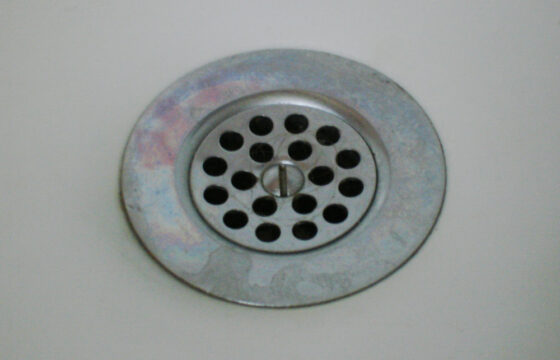
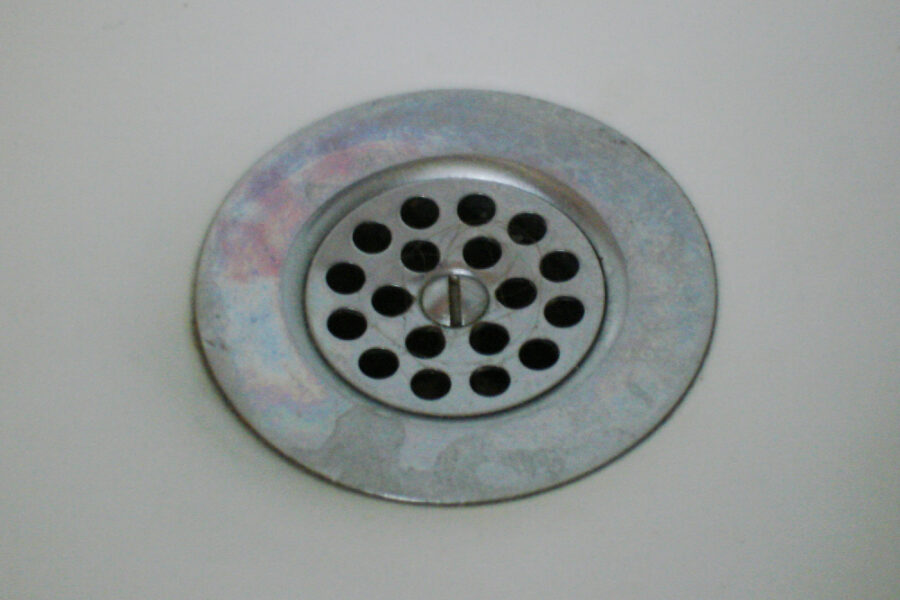
Featured photo: bathtub drain by Stilfehler, CC BY-SA 3.0. The perforated cover is an example, not a removable stopper assembly. Identify your own design before turning any part. Reference media may be resized for display.
Separate retained bathwater from reverse flow
“The tub drains slowly after a bath” describes water you put in the tub taking longer to leave. “The empty tub fills when the toilet flushes” describes water returning from the drainage system. The second situation should not be approached by repeatedly filling and emptying the bath.
| Pattern | What to check next |
|---|---|
| The tub is slow and the stopper barely lifts. | Identify the stopper and its intended open position before adjustment. |
| Hair is visible on an approved removable stopper or strainer. | Clean those accessible parts if there are no chemicals, leaks, or backup signs. |
| The empty tub receives water after toilet or washer use. | Stop using water and follow the first steps for a tub or shower backup. |
| The tub and nearby sink are both slow. | Consider a shared branch rather than assuming two unrelated hair clogs. |
| Fresh moisture appears below the tub or on the ceiling underneath. | Stop using the tub and arrange leak assessment. |
These patterns narrow the question; they do not prove the fault. A tub that drained normally before recent stopper replacement deserves a careful parts-and-fit check. A new timing relationship is useful evidence even when the replacement is not the cause.
Identify the stopper before turning or pulling it
Do not assume every round cap unscrews the same way. Similar-looking stoppers can have a screw, shaft, cartridge, or linkage underneath. Use the drain manufacturer’s instructions for the actual model. Keep the drain body fixed in place.
| What you see | Useful distinction | Avoid |
|---|---|---|
| A cap that lifts and turns or has a small top knob. | Lift-and-turn and related designs use model-specific retention. | Applying more torque when the release method is unknown. |
| A cap that opens and closes when pressed. | A toe-touch or push-operated mechanism may have serviceable parts. | Pulling the whole drain assembly out with the cap. |
| A lever or control at the overflow plate. | A linkage or cable may operate the closure. | Removing the overflow plate or changing linkage length by guesswork. |
| A loose rubber plug or simple removable screen. | Its removal may expose only the entrance, not the trap. | Assuming an empty-looking opening proves the pipe is clear. |
The overflow opening on the side of the tub is part of the waste assembly. It is not a guarantee against flooding if the downstream drain is obstructed. Do not fill a poorly draining tub up to the overflow as a test, and do not loosen the overflow fitting simply to look inside.
For the matching KOHLER assembly only. KOHLER’s ClearFlo and PureFlo toe-tap support guide links this adjustment and replacement video. It addresses an opening or sealing problem at the stopper, not every cause of a slow bathtub drain.
Manufacturer video, 1:17. Open the video on YouTube if the player does not load. This is not a repair filmed or tested by The Home Fix Guide.
- Design: confirm the brand and model. A similar round cap may use a different mechanism.
- Open position: observe normal operation. A cap that barely lifts is a different symptom from a fully open outlet that still drains slowly.
- Direction of the fault: losing bathwater with the stopper closed is a sealing complaint; water coming up from another fixture is a backup warning. Do not use stopper adjustment as the response to a backup.
Keep the work limited: follow the matching product instructions, not a guessed turn count. Do not loosen the drain flange or overflow fitting to imitate this example. Stop if parts bind, the assembly moves, or prior drain cleaner may remain.
A limited cleaning sequence for an isolated slow tub
1. Stop water use and check for earlier treatments
Turn off the faucet. Let existing water recede without adding more. If the tub remains full, the source of the water is uncertain, or sewage may be present, stop and arrange help. Use dry footing and avoid leaning over water you cannot safely identify.
If a chemical opener was used, do not plunge, reach into the drain, or mix in another product. Keep the product information for the service call. Poison Control explains that many drain cleaners contain concentrated corrosive ingredients; diluted-looking standing water should not be treated as harmless residue.
2. Verify the ordinary open position
Operate the stopper normally, without tools or force. Note whether it moves freely and stays open. If the handle moves but the closure does not, record that behavior instead of repeatedly turning it harder.
When the manufacturer’s instructions permit homeowner removal for cleaning, follow that method and keep small parts in a container away from the drain. Stop for a seized fitting, a moving flange, brittle components, or a mechanism you cannot confidently put back together.
3. Collect reachable hair and residue
With gloves on, remove material from the permitted removable part and visible drain entrance. Lift hair out and put it in the trash. Use only compatible cleaning products on the part itself; do not scrape a plated finish or push a wire into hidden pipework.
Roto-Rooter’s bathtub guidance identifies hair accumulation as a common cause of slow tubs. Finding hair supports cleaning that location, but does not prove it was the only restriction. There is no need to claim a root or main-line diagnosis from what comes off the stopper.
4. Reassemble, then make one modest observation
Refit the parts as specified and confirm the stopper opens normally. Only if there is no standing water, no chemical residue, no leak, and no other affected fixture, briefly run a small, attended flow. Stop if the level begins rising or any new leak or cross-fixture reaction appears.
Do not fill the bathtub to measure a full-bath drain time while the fault is unresolved. Record whether the limited observation improved. If the small-flow check is satisfactory, later ordinary use provides additional information; stay alert for recurrence rather than announcing a permanent repair after one brief check.
What if the tub still drains slowly?
If the stopper opens correctly and the accessible hair has been removed, the next issue may be beyond those parts. A plumber can choose access and equipment based on the assembly, pipe condition, and symptoms. Snaking through an unfamiliar overflow assembly is not a necessary next step for every homeowner.
| After the check | Follow-up |
|---|---|
| Drainage improves with normal stopper operation restored. | Record the part and what changed; monitor ordinary use. |
| Drainage is still slow with the stopper open and clean. | Arrange diagnosis instead of repeating identical cleaning. |
| A short improvement disappears quickly. | Report the recurrence interval and previous clearing work. |
| Other fixtures are slow or react. | Use the multiple slow drains guide. |
Should you use a plunger or drain cleaner?
A cup plunger can be appropriate for some localized clogs, but its use depends on the tub assembly and the condition of the waste-and-overflow connections. It is not appropriate for water that may contain drain chemicals or an apparent shared backup. This guide stops at accessible cleaning because it cannot verify those hidden connections.
Do not permanently plug the overflow, force a powered cable through the stopper, or combine multiple drain products. Ask the service provider what method is suitable and tell them about all prior treatments. A chemical product cannot establish whether the drain assembly was installed or adjusted correctly.
Prepare a useful service request
Write down whether the problem affects only the bathtub, when it began, the stopper design, recent replacement work, and exactly what you cleaned. Mention a slow bathroom sink or a gurgling sink even if those fixtures are in a different room.
Ask whether the proposed quote covers diagnosis, accessible clearing, replacement parts, and checking for leaks afterward. A stopper adjustment, a branch-line clearing, and a buried pipe repair are different scopes. Do not approve a large repair only because the tub drains slowly.
Keep hair out without restricting the outlet
After drainage is restored, use a compatible hair catcher that does not interfere with the stopper. Empty it regularly. Record recurring slow drainage in the home plumbing maintenance checklist. If a new catcher itself causes pooling, reassess its fit rather than assuming the underlying fault returned.
Frequently asked questions
Why does the tub drain slowly even when I shower?
The shower and bath use the same tub outlet. Water can accumulate whenever incoming flow exceeds what that outlet and its downstream path can carry. The stopper and accessible hair are useful first checks only when the problem is isolated.
Can a stopper cause slow drainage without a deep clog?
Yes, a closure that does not open properly can restrict the opening. That possibility does not rule out additional debris or a deeper restriction.
Is the overflow a separate emergency drain?
It is part of the tub’s waste arrangement and should not be relied on to handle a blocked downstream path. Stop adding water before an unresolved drainage problem becomes a spill.
Does a slow bathtub mean I need a new bathtub?
No. The symptom alone does not establish a fault in the tub itself. Ask for evidence identifying the affected part or pipe before discussing replacement.
Research-based guidance from The Home Fix Guide. Follow the actual drain’s service instructions. See our editorial policy and the drains and odors overview.