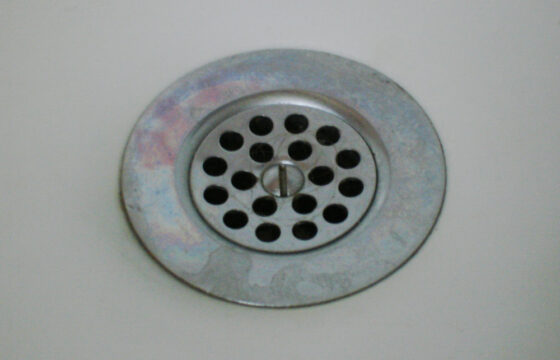
A slow shower drain is often associated with hair or residue around the cover, strainer, or drain entrance. Start by checking whether the problem is limited to this shower. If other drains are also slow, the toilet reacts, or water comes up through the shower drain while the shower is off, stop adding water and investigate the shared drainage system.
This guide covers a shower tray or walk-in shower with water collecting during use. For a shower over a bathtub, use the slow bathtub drain guide, which includes stopper and overflow differences. If the water coming out of the shower head is weak, that is a different problem: see low flow at the shower only.
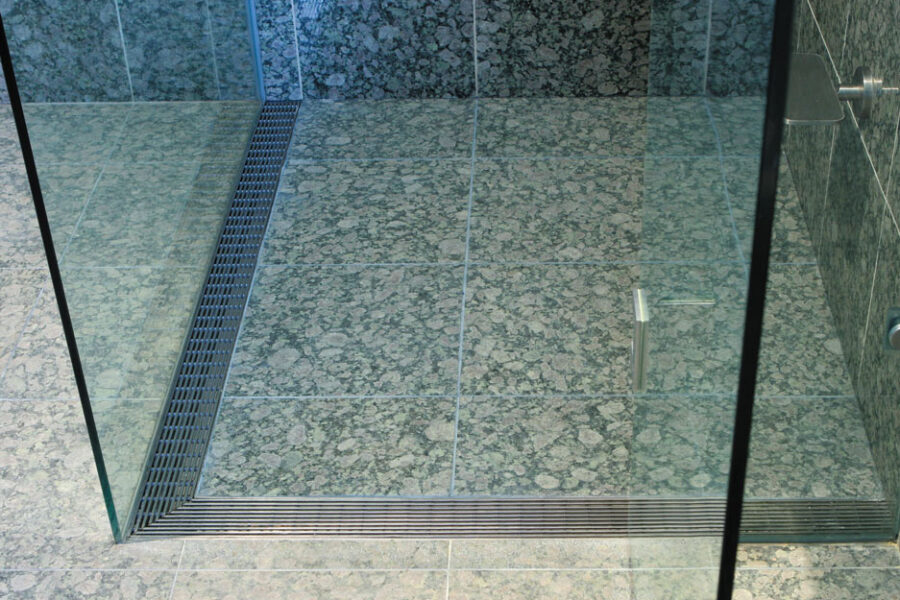
Featured photo: linear shower drain by Troy Creighton (public domain). This identifies one grate design; it is not a model-specific removal guide or our own repair photograph. Reference media may be resized for display.
Is water slow to leave, or coming back up?
Describe the direction of the water before choosing a tool. A shallow pool building while you shower may mean outgoing flow cannot keep up. Water emerging through the drain after a toilet flush or washer discharge is a different observation. Do not deliberately repeat those events to confirm a suspicion.
| Observation | What it suggests checking | Next action |
|---|---|---|
| Water collects around this drain during showering; other fixtures behave normally. | Cover, removable hair basket, or an isolated drain restriction. | Use the accessible cleaning steps below if there are no warning signs. |
| A puddle stays in one corner while the drain entrance is clear. | Surface drainage or the shower base, as well as the outlet. | Photograph the location after use; ask the installer or plumber to assess it. |
| The toilet bubbles or another drain reacts. | A shared drain or venting interaction. | Record both fixtures and arrange assessment. |
| Water rises through the shower drain while the shower is off. | A possible backup farther along the waste path. | Stop using water and follow the first steps for a tub or shower backup. |
The table is a way to organize observations, not a diagnosis of hidden pipes. For noise without rising water, compare toilet bubbling when the shower runs. For actual reverse flow, go directly to water backing up into a tub or shower.
Before touching the drain
Turn off the shower and let an existing shallow pool recede on its own. If it does not recede, do not add more water. Stay out of contaminated water, and keep children and pets away. Stop for a sewage smell with backup, damaged flooring, a leak below the shower, or water near electrical equipment.
Ask whether anyone has poured a drain-opening chemical into the fixture. If a chemical may remain, leave the cover and drain alone and tell the plumber the product and approximate time. Do not add another cleaner, plunge, or insert a tool. Drano’s Snake Plus precautions, for example, prohibit plunging during or after product use and mixing it with other cleaners.
For a chemical-free, isolated slow drain, gather gloves, a flashlight, a small bag for hair, and the tool specified for the removable cover. Use a stable position with dry footing. You should be able to see the part you are handling without reaching blindly into the pipe.
How to clean the parts you can safely reach
1. Identify the cover and any removable basket
A round grate, a screw-fastened cover, and a long linear channel may have different service methods. Look for the drain brand or installation paperwork. Only remove parts identified as removable for routine cleaning. A cover lifting key is not an instruction to pry up the drain flange or disturb waterproofing.
Some linear drains include a hair catcher and a dedicated grate-removal tool. This hansgrohe RainDrain Go example shows why the drain model matters; its components do not establish how another brand comes apart. Stop if a screw is seized, the whole drain body moves, or you cannot identify the removable part.
2. Lift out collected hair rather than washing it onward
With the approved cover or basket removed, collect loose hair and residue from that component and the visible entrance. Put the material in the trash. Clean the removable part according to its care instructions, preserving any seals and the original orientation.
Do not force a wire hanger past a crossbar or push a hair bundle into the pipe. If a hand hair-removal tool is compatible with the drain, use it only as its instructions allow and stop at resistance. The goal here is accessible debris removal, not blind probing of the trap or pipe beyond it.
3. Refit the cover before a limited observation
Reassemble the serviceable parts as specified. Check that the cover sits securely and the surface is safe to stand on. If the opening remains damaged or a part will not refit normally, leave the shower out of use.
Only when the drain is clear of standing water, no chemicals are present, and there are no other affected fixtures or leaks, briefly run a small, attended flow. Stop immediately if water starts collecting, another fixture reacts, or moisture appears outside the shower. Do not fill the tray or leave the water running to see whether the drain eventually catches up.
Match the model first. This Schluter-Systems video covers its KERDI-LINE linear drain. It is a separate product example from the hansgrohe drain above and does not identify the drain in our featured photo.
Manufacturer video, 1:45. Open the video on YouTube if the player does not load. This is not a repair filmed or tested by The Home Fix Guide.
- Removable grate: identify the serviceable cover and its specified lifting method. Do not pry the fixed frame or waterproofing.
- Hair catcher: check your product instructions for a removable strainer rather than assuming every linear drain has the same basket.
- Correct refitting: Schluter’s shower-drain data sheet specifies that KERDI-LINE strainer tabs seat in the channel’s V-grooves. That detail applies to this strainer, not every brand.
Stop point: a clean grate or basket does not establish that hidden pipework is clear. If water still pools after the limited check above, use the result table below. Do not copy removal steps onto an unidentified or seized fitting.
What the result does—and does not—tell you
| Result | Interpretation and next step |
|---|---|
| The brief observation improves after hair removal. | The accessible debris was contributing. Watch subsequent ordinary use; a small-flow check does not prove the entire drain is unrestricted. |
| The cover is clean but water still collects. | Stop repeating the test. A restriction beyond reach or an installation issue remains possible. |
| The drain improves, then becomes slow again soon. | Record how long the improvement lasted and arrange diagnosis of the recurring problem. |
| Water appears elsewhere or another fixture changes. | Stop using connected plumbing and report the combined pattern. |
Tampa’s wastewater guidance distinguishes material near a drain opening from obstructions farther down a line that may need a plumber. A clean-looking grate cannot show which condition exists underneath your shower.
Why not keep trying boiling water, chemicals, or a powered snake?
This procedure does not use boiling water or a sequence of drain chemicals. An unidentified drain, shower finish, and possible prior treatment are a poor basis for choosing either. Visible fizzing is also not evidence that a hair bundle has been removed or a hidden pipe repaired.
A powered machine introduces different access, equipment, and pipe-condition questions. Ask a plumber to select the method if the problem extends beyond the removable parts. Do not climb onto the roof to investigate a suspected vent because the shower is slow.
When to call a plumber
Arrange help for persistent or recurring slow drainage after accessible cleaning, a cover that cannot be serviced safely, leaks, or a problem that began after installation work. Tell the plumber whether water pools over the outlet or elsewhere on the shower floor. Those are useful distinctions when deciding what to inspect.
If multiple drains are slow, do not continue treating the shower as an isolated hair clog. Report the other fixtures and any interaction already observed. Rising wastewater needs prompt help and a pause in household water use.
Keep a short before-and-after record
- When did the drainage change, and was it gradual or sudden?
- Which cover or basket was cleaned, and what was removed?
- Did a limited safe observation improve, remain unchanged, or need to stop?
- Did another fixture react, or did moisture appear outside the shower?
- Was a cleaner used earlier? Record its name without handling residue.
After normal drainage is restored, keep an appropriate hair catcher clear so it does not become the obstruction itself. Add recurring observations to your home plumbing maintenance checklist. A useful record names what changed instead of simply saying “unclogged.”
Frequently asked questions
Why is the shower slow but the bathroom sink is fine?
The problem may be local to the shower, but one normal sink does not prove every shared pipe is clear. Begin with the accessible cover and hair catcher only if the warning signs above are absent.
Does a slow shower drain mean the main sewer line is blocked?
Not by itself. Other affected fixtures, cross-fixture reactions, and wastewater rising from the drain make a shared problem more relevant. The location still needs investigation.
Can I shower if the water eventually drains?
Do not keep using a shower that accumulates water or threatens to overflow. Resolve the restriction or arrange assessment. Water eventually disappearing is not a reliable measure of whether the next shower will be safe.
Is a shower head replacement a drain repair?
No. The shower head belongs to the incoming supply. The drain carries used water away. Reducing supply flow may change how quickly a pool builds but does not establish that a drainage fault has been corrected.
Research-based guidance from The Home Fix Guide. Product examples identify a design, not a tested repair in your home. See our editorial policy and return to the drains and odors overview.