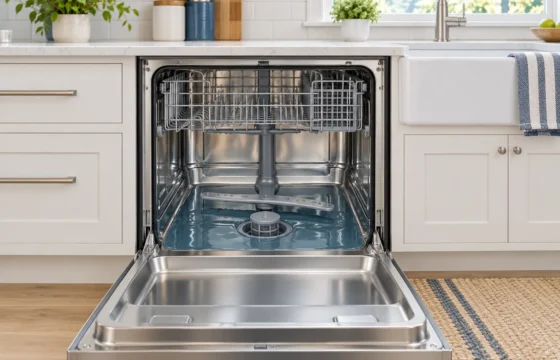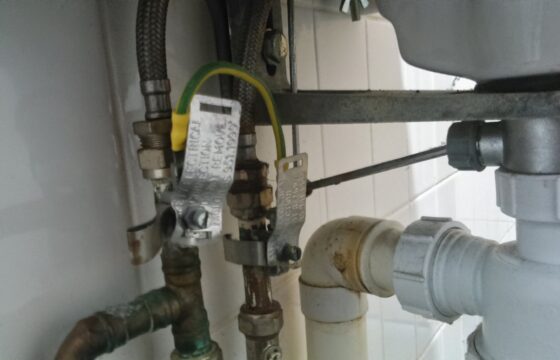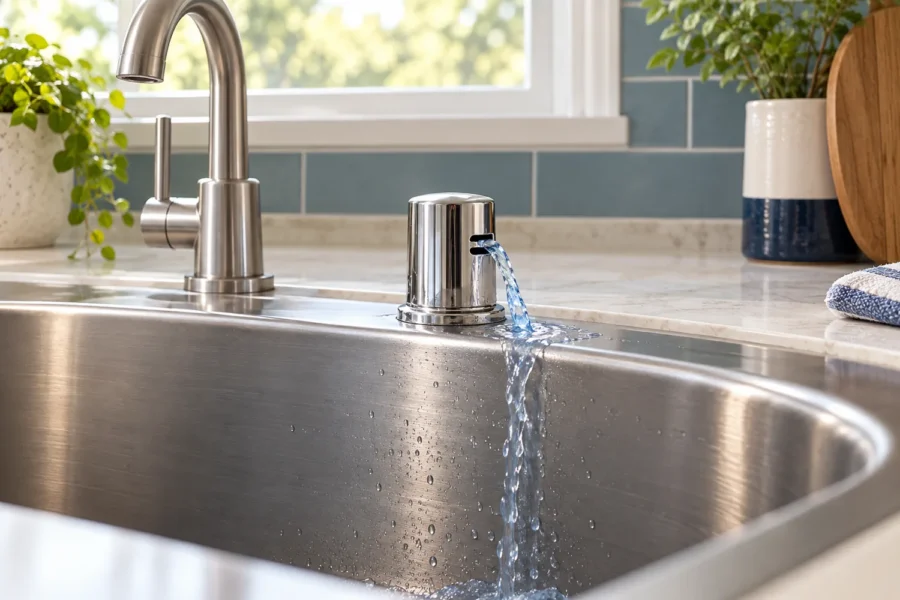
Featured image: an illustrative air-gap overflow scene, not a photograph of a tested repair or a model-specific fitting.
If water is coming out of the dishwasher air-gap opening beside your faucet, stop repeated wash and drain attempts. The opening should never be plugged to hide the overflow. First confirm which fitting is spilling, keep water away from electrical equipment, and record when the spill occurs.
A dishwasher air gap is part of the drain plumbing. An overflow at that fitting calls for a different response from a leak at its base, a rising sink bowl or a dishwasher that simply retains water inside. For water confined to the tub, start with the dishwasher not draining guide. This guide helps you choose the next safe step without disconnecting plumbing.
Is it definitely the dishwasher air gap?
A typical dishwasher air gap has a small cover near the sink faucet, but appearance alone is not enough to identify it. Check the fitting’s markings, installation paperwork or an accessible view of the dry plumbing. If you cannot identify it without moving appliances or disturbing connections, ask the installer or a plumber.
- Water comes from the dishwasher air-gap vent during dishwasher discharge: use the checks in this guide.
- Water comes from an opening on a drinking-water faucet: it may be a reverse-osmosis system’s air gap. Use that water-treatment system’s manual or service provider instead.
- It is a small push button for the garbage disposal: that is an air switch, not a dishwasher drain air gap. Do not remove or pour water into it.
- Water appears around the base or beneath the sink: the source may be a fitting, connection or another leak. Use the under-sink leak guide and avoid opening connections.
- The sink bowl itself rises: stop water use into the affected drain and follow the shared kitchen-drain route.
Do not start a cycle just to prove the source. Use what you already saw, or a photo taken safely during the incident. An uncertain identification is a reason to leave the cover alone.
Choose the next step from what you see
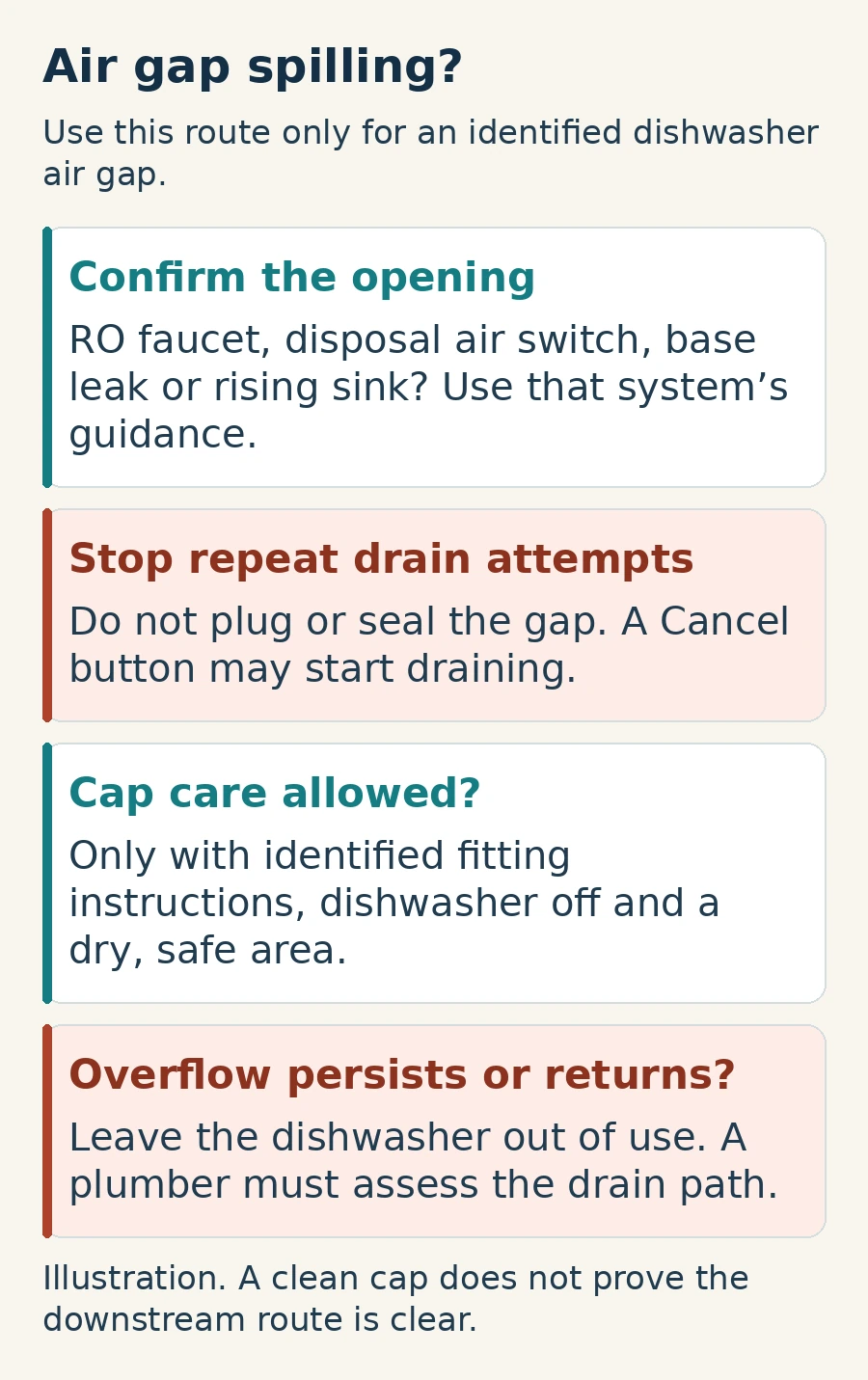
What the air gap does, and what overflow means
The air gap provides a break between the dishwasher discharge and the connected drain to help prevent dirty drain water from backing into the appliance. GE explains this purpose in its air-gap support guidance. Not every kitchen has this fitting, and requirements vary with the installation and local rules.
Water escaping from the opening means the discharge is not being carried away normally at that point. It does not tell you exactly which part is restricted. Debris in the fitting, a problem farther along the outlet route, a shared-drain restriction or an installation issue may need investigation. GE’s leak-prevention guidance identifies a clogged sink drain as one reason dishwasher discharge cannot drain normally.
Never tape over, plug, seal or bypass the air gap. Do not replace it with a high loop based on an internet shortcut. Have a qualified installer or plumber determine the arrangement required for the exact appliance and location.
Stop repeated cycles and protect the area
Do not keep pressing Drain or Cancel to see whether the spill clears. Depending on the dishwasher, Cancel may initiate a drain sequence. Use the exact manual’s instructions for safely interrupting the appliance; do not assume a familiar-looking button immediately stops discharge.
If water reaches the cabinet or floor, or is near an outlet, disposal, cord or other electrical equipment, stop troubleshooting and keep clear. Do not reach into a wet cabinet to unplug anything. Power isolation must be possible from a dry, safe location. Seek urgent help if an active leak cannot be safely stopped; smoke, sparks, a burning smell or repeated breaker trips also end homeowner checks.
Only mop up from a safe dry position after the discharge has stopped and there is no electrical exposure. Do not dismantle the fitting over an active spill. A towel can protect a dry surrounding surface, but it must never cover or obstruct the air-gap opening.
When limited cap inspection is reasonable
GE describes cover and cap cleaning for typical air gaps in its air-gap leakage guidance, including keeping the dishwasher off before opening the fitting. However, covers and inner caps differ. Treat that page as background, not permission to force an unknown fitting apart.
Limit homeowner care to all of the following conditions:
- You have positively identified the fitting and found its instructions for owner cap inspection or cleaning.
- The dishwasher is off, no drain sequence is running, and the area is dry and safe. Follow any additional isolation and preparation requirements in the applicable manuals.
- The instructions can be followed without force, pulling hoses, loosening plumbing connections or reaching into an obscured area.
- You remove only the owner-serviceable cover or cap described by those instructions, clean only as directed, and refit it correctly before any later operation.
If a cap resists, you see damage, or the instructions do not match the fitting, stop. Do not push long wires, brushes or other probes down the drain path. Do not disconnect the large outlet hose, remove a disposal inlet plug, or add drain chemicals.
A clean cap is not clearance to keep testing an overflowing drain. This guide does not call for a new cycle to demonstrate success. If overflow persists or recurs during later normal use, keep the dishwasher out of use and arrange a plumbing assessment. Any verification after maintenance should follow the identified fitting and appliance instructions, with no backup, leak or electrical hazard.
Did it begin after a new disposal or dishwasher?
Timing is valuable. Tell the installer if the first overflow followed disposal replacement, dishwasher installation, a sink change or drain work. Ask them to check the connection and inlet preparation, outlet route, hose condition and installation requirements against the relevant manuals.
Those are installer questions, not a suggestion to remove plugs or reroute hoses yourself. Even if the sink drains normally, a problem can remain in the dishwasher’s separate discharge route. Do not assume the dishwasher pump needs replacing just because water reaches the air gap.
What to tell the plumber
For persistent or recurrent overflow, GE’s leakage support page recommends plumbing help when basic care does not resolve it. A useful service request includes:
- A photo showing the exact opening that spilled, without taking the fitting apart
- Whether the incident occurred during dishwasher discharge, sink use or another event
- Whether the sink rose, gurgled, drained slowly or appeared normal
- Any water in the cabinet or on the floor and any electrical concern
- The dishwasher model and the air-gap make or markings, if accessible
- Recent work, when the first overflow occurred, and any permitted cap cleaning already done
If other fixtures are also slow or backing up, stop adding water and use the multiple-drain warning guide. Report the full pattern rather than just the small fitting on the counter.
Common questions
Is a little air-gap overflow normal?
Treat water escaping from the dishwasher air-gap opening during discharge as a drainage symptom to investigate. Do not dismiss it because the quantity is small. First distinguish overflow from splash water or a leak at the fitting’s base.
Why does it overflow if the sink drains well?
The sink’s normal behavior does not prove the separate dishwasher discharge route is clear. A plumber can assess the fitting and downstream connections without assuming the sink bowl must also back up.
Can I cap it temporarily and keep washing?
No. Leave the protective opening unobstructed and keep the dishwasher out of use until the cause is addressed. Hiding the spill does not correct the drain problem.
Where can I find official visual guidance?
GE’s air-gap support resource includes visual material for the arrangements it describes. Match the fitting and its instructions before using any demonstration; covers and drain layouts are not all alike.
Editorial scope: identifying the symptom and limited, fitting-authorized cap care. Illustrations are explanatory rather than a model-specific plumbing plan. Manufacturer resources checked October 1, 2026.