Sink smells bad? The odor can come from drain residue, a dry trap in an unused fixture, or the water itself. First rule out an urgent gas or sewage problem. For a mild, localized odor, compare water away from the sink and note whether drainage or nearby fixtures have changed.
For ordinary non-emergency symptoms, compare the drain and odor troubleshooting paths. Follow the safety warnings below before investigating an uncertain smell.
Sink smells bad: know when to leave instead of investigating
If you suspect a natural gas leak, leave immediately. Do not operate switches, use a phone, or create a flame in the suspected leak area. From a safe location, call 911 and your gas utility. Do not assume a rotten-egg smell comes from a drain merely because you notice it in the kitchen.
PG&E’s gas safety guidance describes the sulfur-like odor added to natural gas and the need to leave before calling. Smell alone cannot reliably tell you which gas is present. A strong unexplained odor or suspected gas leak is outside the scope of the checks below.
If wastewater is coming up through the sink, stop using connected plumbing and keep people and pets away. Contact an appropriate plumber or local sewer utility. Do not keep running the faucet to wash away the smell.
Separate the smell of the water from the smell near the drain
For a mild odor localized around a normally draining sink, a simple comparison can help you describe the problem. The Alameda County Water District’s diagnostic guide recommends checking water in a clean glass away from the sink so drain odors are less likely to confuse the observation.
- Use a clean glass with no lingering detergent or food smell.
- Collect a small sample of cold tap water and turn off the faucet. Skip this check if there is a backup, a water-use advisory, strong fumes, or a suspected gas leak.
- Move away from the sink and notice whether the odor is still present in the sample. Do not taste questionable water or deliberately inhale deeply.
- Record whether the odor seems associated with the water or remains around the sink. This observation helps direct a service call; it is not a drinking-water safety test.
If the water smells normal away from the sink, investigate the drain area rather than immediately buying a water filter. If an unusual odor remains in the water, contact your water supplier for advice. For a private well, contact a qualified well professional or your local health department about appropriate testing.
If you notice a fuel or solvent-like odor in water, stop using it and contact the water supplier promptly. ACWD identifies that pattern as potentially serious. Do not assume boiling or an ordinary household filter makes it safe.
Use the pattern to choose a next step
| What you notice | What to check next |
|---|---|
| Mild odor near one drain, but not in water away from it | Look at accessible stopper surfaces and note whether the sink is rarely used |
| Odor at a sink unused for weeks | Consider an evaporated trap seal if the fixture otherwise drains normally |
| Odor occurs only with hot water | Tell a plumber or water-heater service provider about the hot/cold difference |
| Odor remains in cold water at several taps | Contact the water supplier and follow its instructions |
| Odor with gurgling, slow drainage, or rising wastewater | Stop treating it as a surface-cleaning problem and arrange plumbing assessment |
| Odor seems concentrated in a damp cabinet | Stop the leak or arrange diagnosis; masking the smell does not address moisture |
These observations narrow the question; none identifies a failed part by itself. “The odor starts with hot water at two sinks” gives a service provider more information than “the bathroom smells.” Do not change several parts before establishing what needs repair.
Could a rarely used sink have a dry trap?
Observe before choosing a treatment
- Rarely used sink: if it drains normally and there is no backup or hazardous-odor warning, restore the seal using the ordinary water-use check below.
- Smell returns: record how quickly and whether other fixtures trigger it. A brief improvement does not explain why the seal was lost.
- Wet, corroded, or incomplete plumbing: stop the routine check and have the assembly assessed. Do not disassemble the trap solely to smell inside it.
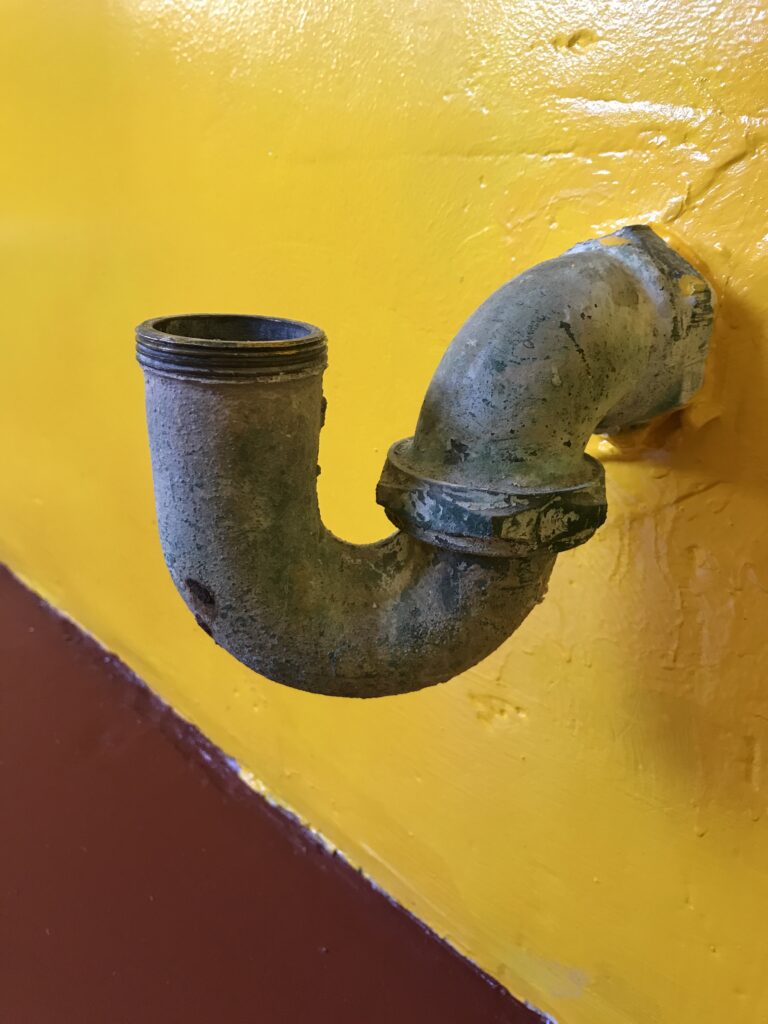
The curved trap beneath a sink normally holds water that helps separate indoor air from the drain system. Brevard County Utility Services explains that this water can evaporate from seldom-used fixtures and suggests adding a small amount of water to refill the trap.
If the smell is mild, the sink has not been used recently, and there is no backup or leak, run a small amount of water into the drain. Brevard gives one or two cups as an example. Stay nearby and stop if water collects in the basin or appears below it.
Note whether the odor improves and whether it returns during ordinary use. A recurring smell from a regularly used sink deserves a plumber’s assessment; adding water repeatedly does not explain why the seal might not be retained. Do not pour oil into the drain or dismantle the trap as a first response.
Add seldom-used fixtures to your home plumbing maintenance checklist. Keep the reminder tied to actual use rather than treating every fixture in the home the same.
Check accessible surfaces without mixing chemicals
A stopper, strainer, or the area around the drain can hold residue. With no chemicals or contaminated backup present, inspect the surfaces you can reach safely and clean removable components only as their manufacturer directs. Dispose of collected debris in the trash rather than washing it back down.
Stopper designs differ. Do not force a cap upward or unscrew an unfamiliar sealed connection just because it looks removable. Our slow bathroom sink guide explains the distinction between simple accessible cleaning and parts held by a pivot mechanism.
If a kitchen sink smells and also drains slowly, use the slow kitchen sink drain guide to distinguish basket, disposal, and shared-drain observations. Its stop-use warnings apply if water rises or leaks into the cabinet; cleaning an accessible surface does not establish that the connected drain is clear.
Ask whether anyone has already poured a drain cleaner into the sink. If yes or uncertain, do not add another cleaner, plunge, or disconnect pipes. Drano’s safety directions warn against mixing products and plunging during or after treatment. Give the product details to the plumber.
This guide does not recommend a universal bleach, vinegar, or boiling-water recipe. Cleaning instructions depend on the fixture, finish, existing products, and actual cause. A pleasant fragrance after treatment does not prove a drainage fault has been repaired.
What if the odor occurs only with hot water?
Tell the service provider whether cold water is normal and whether the hot-water odor appears at more than one tap. The Lansing Board of Water & Light’s odor guidance uses hot/cold comparisons to distinguish drain odors from possible water-heater issues.
Do not open electrical covers, adjust gas controls, remove an anode rod, or raise the heater temperature to treat a smell based on this article. A qualified professional should assess the equipment and source of the odor. Keep the heater’s model information available if it is safely readable.
You do not need to establish the cause before asking for help. Report the pattern, when it began, and any recent work or period of non-use. Let the provider decide which equipment-specific checks are appropriate.
When does a drain odor need professional help?
Arrange assessment if the smell persists after straightforward cleaning or trap refilling, returns frequently, or accompanies damaged fittings. If the sink also bubbles, our gurgling sink guide explains which timing and cross-fixture observations are useful.
For cabinet moisture, stop using the fixture and describe the first wet location. The under-sink leak guide helps separate supply, faucet, and drain clues in a kitchen installation. Moisture deserves attention even when the basin empties normally.
Contact building management for rental or shared plumbing. For a municipal sewer connection, ask the local utility how it handles suspected public-line problems. For septic trouble, use a qualified septic service provider; do not open tanks or enter confined spaces.
What should a repair quote include?
There is no single repair price for a smell. Cleaning accessible residue, restoring a trap assembly, diagnosing a water-heater problem, and correcting a drainage fault involve different work.
Request a written quote separating the visit or diagnostic charge from proposed cleaning, parts, labor, and any further inspection. Ask what evidence supports the proposed repair and whether additional work needs your approval. A low advertised drain-clearing price may not cover the service your situation actually requires.
Keep a brief record of the symptom, observations, products already used, and the confirmed repair. That record helps if the smell returns and reduces the chance of repeating an ineffective treatment.
Frequently asked questions
Does a sink smell mean the drinking water is unsafe?
Not necessarily: the odor may be near the drain rather than in the water. However, a normal smell does not certify safety either. Follow local advisories and ask the water supplier about an unexplained change in the water.
Why does the smell appear only when I turn on the faucet?
Running water can make a drain odor more noticeable, or the water itself may carry an odor. For a mild localized problem with no warning signs, the clean-glass comparison helps distinguish those observations.
Should I replace the P-trap immediately?
No. A dry trap may simply need water, while a damaged or incorrectly functioning assembly needs diagnosis. Replacing parts before identifying the cause can leave the original issue unresolved.
This is a research-based guide for US homeowners. It is not a property inspection, water-quality certification, or emergency response service. Manufacturer instructions and local utility advice take priority.
Featured photograph: Point3D Commercial Imaging on Unsplash. It illustrates a bathroom setting, not a documented odor problem or repair performed by our team.