Sink gurgling in a bathroom or kitchen can point to a partial drain blockage, venting problem, or pressure changes caused by another fixture draining. The sound alone cannot identify the fault. Note when it happens, whether drainage has slowed, and whether other fixtures react. Stop using plumbing if wastewater starts backing up.
Use the drains and odors troubleshooting overview to compare this sound with slow drainage and other symptoms.
Choose a starting point:Noise after another fixture runs? Record both connected fixtures.Preparing a service call? Keep the observed result and repair record.Timing and safety checks: compare gurgling during sink drainage with noise after another fixture runs. If wastewater rises, stop adding water and follow the backup and other warning-sign guidance instead of repeating a test. If an AAV is visible, compare how it responds to air pressure before choosing parts.
What does a gurgling sink tell you?
A hollow bubbling noise is a clue about air and water moving through the drainage system. It is different from a weak stream at the faucet. If the problem is the amount of water coming out of the spout, start with our guide to low flow at one faucet.
Oatey’s drain-line guidance identifies partial blockages as one explanation for gurgling and describes the role of venting in drainage. That supports checking both drainage behavior and air movement rather than buying a replacement part based only on a sound.
“The sink gurgles” is a starting point. “The bathroom sink gurgles immediately after the toilet flushes, but no water rises in the basin” gives a plumber more useful information. Neither description proves where a restriction is located.
Sink gurgling after a toilet flush or while draining: compare the timing
| Pattern | What to record during normal use | Next step |
|---|---|---|
| Noise only while this sink drains | Whether water collects in the basin or drainage has slowed | Compare the local drain checks before touching parts. |
| Noise after a toilet flush or washer discharge | The fixture in use, the sink that reacted, and whether water rose | Read about shared-fixture interactions; report both fixtures without recreating the event. |
| Noise began after plumbing work | What was replaced or moved, and when the sound started | Ask the installer to review the changed drain and vent arrangement. |
| Several drains are slow or wastewater backs up | The affected fixtures and any rising wastewater already observed | Stop adding water, follow the warning-sign guidance, and arrange prompt assessment. |
| Noise with cabinet moisture or damaged pipework | The first wet location visible from a dry, safe position | Stop using the fixture and have the leak assessed; do not disturb wet or damaged connections. |
| An air admittance valve (AAV) is visible | Any accessible model marking and the same drainage, timing, or odor observations | Read the AAV cautions. Its presence does not prove failure; leave it fitted during observation. |
Do not repeatedly flush toilets or start laundry cycles to recreate a symptom. A description of what happened during normal use is enough. Deliberately increasing the load can turn a drainage problem into an overflow.
Three possibilities worth distinguishing
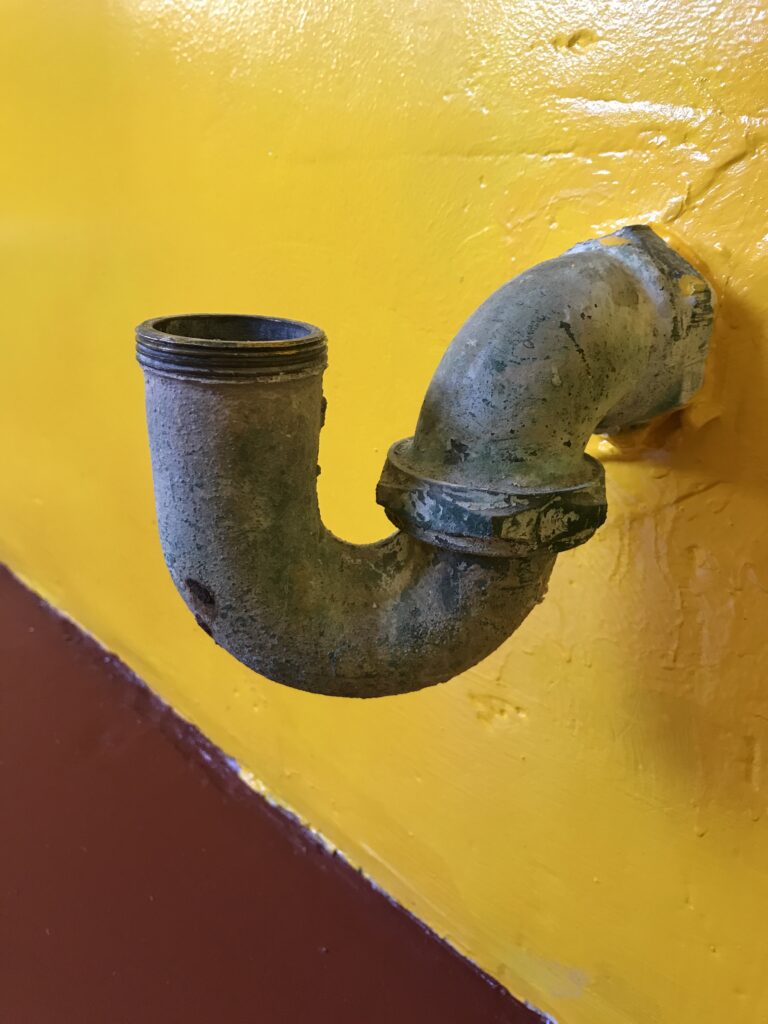
Keep odor and water-seal observations with the timing record. Report recurring odor or a water seal that appears to be lost, as well as the fixture in use when the sound occurred. Do not remove the trap or repeat water tests to confirm a theory.
Make a recording only if the sound occurs during otherwise safe, ordinary use. Several affected drains or rising wastewater need prompt assessment, not repeated test loads.
A restriction in the drain path
If the same sink is also getting slower, an obstruction deserves consideration. Hair or residue near a bathroom stopper may be visible; a restriction farther away may not be. An empty-looking drain opening does not establish that the pipe beyond it is clear.
For a single bathroom basin with no backup, chemical residue, or leaking connections, use the slow bathroom sink checklist. It explains how to identify the stopper and when to leave attached parts alone. Cleaning what is safely accessible is a limited check, not proof that the entire drain has been cleared.
For a kitchen sink that also drains slowly, compare the one-bowl, double-bowl, disposal, and dishwasher drainage patterns. Record what happened during normal use; do not run a disposal or dishwasher to reproduce rising water.
A venting or air-admittance issue
Some installations use an air admittance valve, or AAV, to admit air into the drain system. Others use different vent arrangements. Oatey’s AAV guidance lists gurgling, slow drainage, and odor among symptoms that can accompany valve problems. It also requires attention to local approval, positioning, and accessibility.
For Oatey’s Sure-Vent specifically, the manufacturer’s malfunction FAQ says slow drainage is typically unrelated to valve failure: a partial blockage can keep the valve closed during use. This supports investigating drainage before buying a replacement valve; it does not diagnose every AAV remotely.
The presence of a valve does not prove it has failed. Leave it fitted while documenting the symptom. Do not remove a cap or valve to make the noise disappear, and do not seal ventilation openings. A plumber should determine whether a valve, a blockage, or the installation itself needs attention. This guide does not provide a universal vent modification procedure.
Video reference: recognize an air admittance valve
This is an installation demonstration, not a test that proves your vent is faulty. Oatey’s example shows an air admittance valve and its connection to a drain arrangement. Use it to recognize the component and understand why access and the installation instructions matter. The curved water-holding trap and the air valve are different parts; some homes use a different vent arrangement.
Manufacturer source: Oatey’s AAV project guide and original video. Open on YouTube if the player is unavailable. This is third-party footage, not a diagnosis or installation performed by The Home Fix Guide.
Keep observation separate from alteration. Do not remove a valve to silence a gurgle, cut piping, or fill a slow or backing-up sink to reproduce an installation test. Ask a plumber to check the actual drain and vent arrangement and applicable local requirements before changing it. For a mild localized odor, use the sink odor observation record; for a slow basin, compare the stopper designs and cleaning example. Follow each guide’s safety checks first.
A problem shared with other fixtures
When a sink reacts to a toilet or washing machine, describe both fixtures. Abington Township’s wastewater FAQ explains that discharge from one fixture can create air-pressure changes and bubbling elsewhere. It recommends professional investigation rather than treating the sound as a diagnosis.
For example, hearing the sound after every washer discharge is more useful than reporting that the sink is “sometimes noisy.” Note whether this started recently or has changed. Do not assume that a nearby fixture and the sink have separate drain paths merely because they are in different rooms.
When several fixtures are also draining slowly, use the multiple-drain observation record to describe the affected areas. Do not add test loads to recreate the sound.
Safe observations you can make before the service call
- Check for backup first. If water is rising from a drain, stop the observation and stop using connected plumbing. Keep people and pets away from wastewater.
- Record ordinary behavior. Note the fixture in use when the sound occurred, whether the basin drained normally, and whether another drain reacted. Avoid running extra water just for the test.
- Look at accessible areas. From a dry, safe position, check for visible cabinet moisture or a loose component. Do not crawl into a wet space or touch electrical equipment near water.
- List recent changes. Include a new sink, disposal, drain, remodeling work, or a recent clearing attempt. Timing can direct an inspection but does not prove who or what caused the problem.
- Identify prior treatments. Ask household members whether a drain chemical was used. Give the product name and approximate time to the professional.
If water appears below a kitchen sink, use our under-sink leak guide to describe its timing and location. A drain sound and a leak can occur together; tightening every fitting does not establish the cause of either.
A short recording can preserve a sound that is difficult to describe. Take it only if normal use is safe. Avoid leaning over a drain to smell it or opening a pipe to capture a better recording.
When to stop using the plumbing
Water backing up into a sink, tub, shower, or floor drain is a reason to stop adding water. Several slow drains, gurgling across multiple fixtures, and sewage odors are warning signs listed by Winterset’s sewer department. Arrange prompt assessment through a plumber and, where relevant, your local sewer utility.
If you are connected to municipal sewer and neighbors report similar trouble, pass that information to the utility. Use its local reporting process. In an apartment or rental, notify building management because the affected pipework may serve other units.
If your home has a septic system, contact a qualified septic service provider. The EPA lists gurgling, very slow drains, and sewage backup among signs of possible septic malfunction. Tell the provider about any surface wetness or unusual conditions already noticed near the system, but do not open tanks or walk into contaminated areas to investigate.
Do not assume persistent odors are harmless because water still drains. Seek professional assessment. Leave an area with strong fumes rather than continuing a drain investigation there.
For a mild, localized odor without urgent warning signs, the sink odor guide explains how to compare smells near the drain with smells in the water. Follow its emergency guidance first if you suspect gas or encounter strong fumes.
If a toilet bubbles while the shower runs, record the interaction between those fixtures and stop adding water if the bowl rises or wastewater appears.
What to avoid while the cause is uncertain
- Do not mix drain treatments. Adding another product is not a reliable way to deal with an unidentified problem.
- Do not plunge a chemically treated drain. Drano’s safety instructions warn against plunging during or after use and against mixing with other cleaners. Tell a plumber about any product that may remain inside.
- Do not climb onto the roof to clear a suspected vent. A noise at a sink does not justify that access risk or prove the roof vent is obstructed.
- Do not disconnect traps, open cleanouts, or remove valves just to listen. Leave invasive investigation to someone who can manage the release of water or gases and restore the system correctly.
A routine drain-clearing product cannot correct every installation or venting issue. Repeating a treatment after no improvement can also make subsequent work harder to plan safely.
Ask for diagnosis before approving a repair
Ask the plumber what evidence supports the proposed cause. Useful questions include: Is the issue isolated to this fixture? Was a restriction found? Does the drain and vent arrangement need correction? What result will show that the repair worked?
Costs depend on that scope. A visit to inspect a fixture, clearing an accessible drain, correcting a vent arrangement, and repairing a damaged buried line are different services. We do not give a national dollar estimate for a sound that has not been diagnosed.
Request an itemized quote in USD identifying the diagnostic fee, clearing work, any camera inspection, replacement parts, and after-hours charges. Ask which additional work requires your approval. Before authorizing major replacement, ask to see the findings and understand whether a less extensive repair is appropriate.
Record the result and reduce repeat problems
After repair, record the finding, work completed, and whether the noise and any drainage delay changed. Add this to your home plumbing maintenance record. Keep the invoice and part information so a returning symptom can be assessed against the actual previous work.
The City of Tampa’s drain-prevention guidance identifies grease, hair, food particles, and roots among causes of blockages. Keep food scraps and grease out of sink drains, and remove collected hair from appropriate accessible strainers. These habits reduce avoidable material entering the system; they do not repair existing pipe damage.
Frequently asked questions
Does a gurgling sink always mean a blocked vent?
No. A restriction or discharge from another fixture can also be involved. Sound alone cannot identify a failed part or its location.
Why does my sink gurgle when the toilet flushes?
The timing suggests an interaction within the drainage system. Note whether the sink also drains slowly or water rises. Give both observations to a plumber rather than replacing the sink’s stopper as a first assumption.
Can I keep using a sink that gurgles but drains normally?
Do not ignore a new or recurring sound. Arrange assessment if it persists, changes, or comes with odor or other affected fixtures. Stop using connected plumbing if wastewater begins to rise.
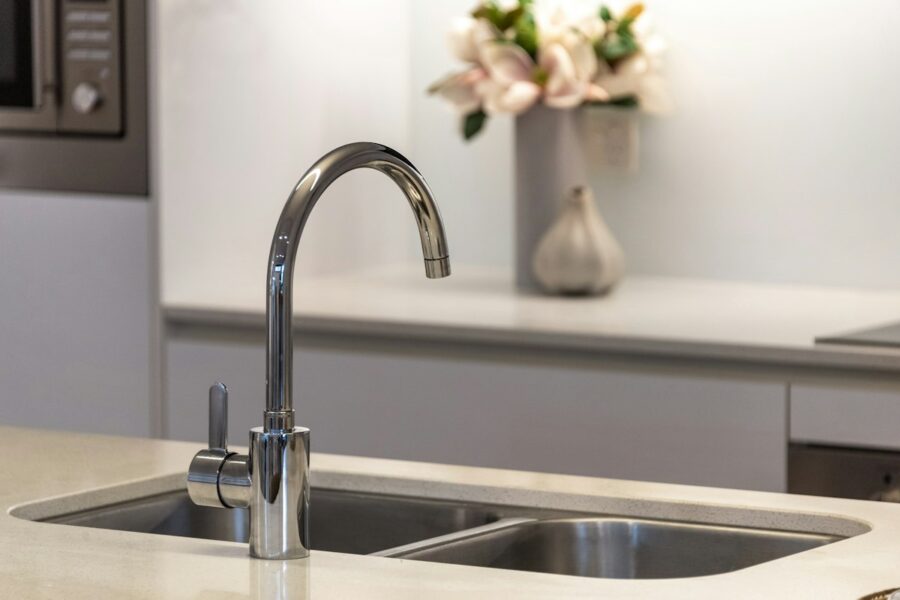
Featured photograph: Steven Ungermann on Unsplash. It illustrates a kitchen setting, not a diagnosed drain problem or a repair performed by our team. This guide is based on published sources and is not a remote diagnosis.