To troubleshoot a leaking outdoor faucet, first identify where the water appears and whether the faucet is on or off. An outside faucet, hose bib, or spigot can leak at the hose connection, handle, spout, vacuum breaker, or pipe inside the wall. Shut it off and stop testing if water enters the building; brief drain-down may be normal on some frost-proof models.
A leaking sprinkler zone and a leaking hose faucet need different checks. Compare the visible-leak troubleshooting paths.
Outdoor faucet leaking: find the location before buying a repair kit
Do not remove a vacuum breaker or tighten an unfamiliar cap as a general fix. If your next step requires taking a fitting apart, identify the faucet and its safe isolation method first.
Start with the last safe observation you already have. Did the leak appear only while watering, immediately after closing the handle, or long afterward? Was the wet point on the faucet itself, at the garden hose coupling, or indoors behind the same wall?
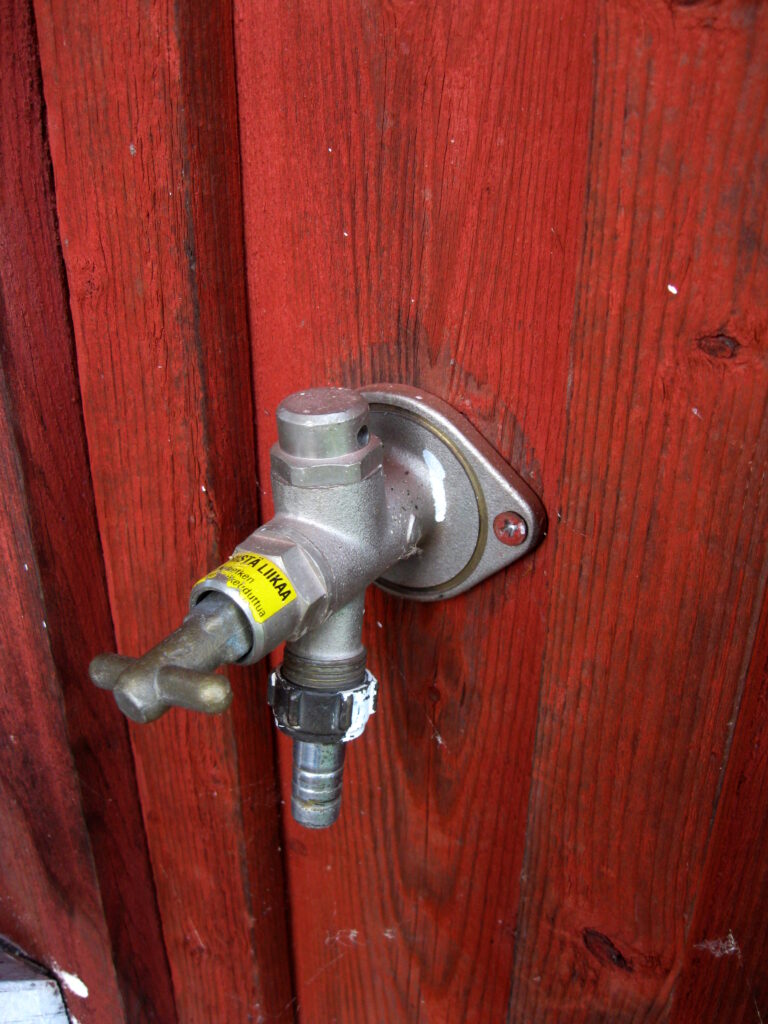
A useful photograph includes the full faucet, its handle, any cap or vacuum breaker, the hose connection, and readable brand markings. Do not dismantle the faucet to identify it. A casting that looks similar to another brand may use different stem lengths, seals, and service steps.
| Location or timing | What may be happening | Next step |
|---|---|---|
| At the garden hose coupling while on | Hose washer, coupling, or mating-surface problem | Shut off and release hose pressure safely before checking the hose end. |
| Behind the handle during use | Stem packing or another handle-area seal | Identify the faucet and follow its service instructions or call a plumber. |
| At the spout just after closing | Residual drain-down on a suitable frost-proof design | Compare with model guidance and observe whether it stops. |
| At the spout persistently while off | The shutoff mechanism may not be sealing | Arrange a model-specific repair. |
| At a vacuum-breaker cap | A protective assembly may need service | Do not plug, remove, or defeat the device. |
| Indoors or around the wall penetration | Pipe, connection, or freeze damage may be involved | Stop use and get a plumber’s assessment. |
These are possibilities, not a parts diagnosis. A wet hose can also carry water back toward the wall and confuse the picture. Identify the first wet point, while treating any indoor moisture as a reason to stop.
Outdoor faucet leaks when turned off: drain-down or a continuing drip?
“Frost-proof” describes a design that depends on correct installation and drainage; it is not a promise against every freeze. On a typical frost-proof wall faucet, the shutoff point is inside the building and water in the outer tube can drain after closing.
Woodford’s frost-proof faucet explanation shows why downward pitch and removing a hose in freezing weather matter for its standard design. A trapped section of water can freeze, and damage may become apparent only when the faucet is later opened.
Distinguish a finite drain-down from water that keeps returning. As a model-specific example, PRIER’s C-144 instructions describe dripping for up to 60 seconds after shutoff while retained water drains. That number is not a universal allowance for another faucet, nor does it prove your installation drains correctly. Persistent dripping calls for the exact model’s sealing checks, not more force on the handle.
Keep three observations together: the first wet location; whether it happened during use, immediately after closing, or later; and whether a hose or accessory was attached. Do not repeat watering to reproduce an indoor leak. PRIER distinguishes concealed freeze damage from spout, handle, and vacuum-breaker faults. Moisture at the wall or indoors takes priority over timing the drip.
If the faucet drips continuously after it should have drained, do not keep tightening the handle harder. Excess force may damage parts without correcting the sealing problem. For an indoor sink faucet instead, use our faucet dripping after shutoff guide; the internal design may differ.
Watch a frost-free faucet example before choosing parts
This manufacturer overview shows the Woodford Model 17, not every outdoor spigot. Use it alongside the photographs and model markings on your faucet. Woodford identifies an integrated vacuum breaker on this model and makes freeze protection dependent on correct installation and hose removal in freezing conditions.
Source: Woodford Manufacturing’s Model 17 page and original video. Open the source video on YouTube if the player is unavailable. This is third-party product explanation, not a leak diagnosed or repair performed by The Home Fix Guide. Product claims do not establish compatibility with your installation.
Use the leak location to choose the next check. A hose-coupling drip, a handle-area leak, and moisture inside the wall need different responses. The top cap is not an invitation to remove backflow protection. Do not block a vacuum breaker, force an unidentified fitting, or keep running the faucet when water appears indoors.
For routine preparation, keep model information and seasonal observations in your home plumbing maintenance record. If a gauge test is needed later, first rule out a damaged or leaking faucet; see the scope of a household pressure check.
Outdoor faucet leaks when a hose is attached: where is the first wet point?
A hose being attached does not, by itself, identify the faulty part. If the first wet point is the coupling where the hose meets the faucet, use the limited washer check below. If water comes from behind the handle or from a separate cap on top, go to the stem check or vacuum-breaker check. Water at the wall or indoors means stop using the faucet.
This check is only for a normal, accessible garden hose fitting, with no indoor leak, damaged wall pipe, chemical attachment, or uncertain connection. Close the faucet normally. Release remaining pressure through the hose nozzle in a safe direction, away from people and electrical equipment. If pressure does not release or the connection is seized, stop.
Disconnect the hose by hand if it releases normally; do not use the hose as a lever against the wall faucet. Look for a missing, hardened, damaged, or displaced washer inside the hose coupling. Also look for debris, obvious damage to the coupling, or a distorted sealing face.
Replace a faulty washer with the correct type for that hose connection and follow the hose manufacturer’s instructions. Do not add tape as a substitute for the washer or repeatedly stack washers. Reconnect without cross-threading or excessive force. If you are unsure what connection you have, ask the manufacturer or a plumber.
A brief, attended check may be appropriate after a simple hose-washer correction when the faucet and wall have no warning signs. Stop immediately if any water appears at the wall or indoors. Do not leave the faucet running while searching another room for damage.
Does the faucet leak with a hose timer or closed spray nozzle?
A hose timer can stop watering while the faucet upstream stays open. A closed nozzle can do the same. That leaves the connection under pressure even though no water is spraying; it is a different condition from closing the faucet itself.
Check whether your faucet and backflow device permit that arrangement. For example, Woodford’s Model 17 specification limits continuous water pressure to 12 hours. This is a model-specific restriction, not a safe-use allowance for every outdoor faucet or an instruction to run a leaking one for 12 hours.
If leakage appears with an accessory, close the faucet normally and use the safe hose-pressure release steps above. Do not remove the vacuum breaker to make a timer fit. Ask the manufacturer or plumber to confirm timer compatibility before leaving a faucet open for automatic watering.
Outdoor faucet leaking from the stem or behind the handle
The nut behind a handle is not a universal adjustment point. Different faucets use different sealing and operating arrangements. Identify the exact model before considering a packing adjustment, and follow its instructions about water isolation, tools, and tightening. If the model is unknown, a plumber can identify it without trial-and-error disassembly.
Repair or replace? A Woodford Model 17 example
Woodford’s Model 17 troubleshooting sheet separates these repair paths. They are examples for a confirmed Model 17, not instructions for every hose bib:
- Stem leak: the specified packing-nut adjustment may suffice; a persistent leak can require replacement packing.
- Outlet still drips while off: inspect the seat rubber and its retaining screw. A damaged valve seat can make whole-faucet replacement necessary.
- Top vacuum breaker leaks: check for contamination or damaged components before choosing the matching service kit.
- Confirmed burst wall tube: Woodford calls for faucet replacement. Moisture near the wall alone does not establish that diagnosis.
Match the actual model and current parts diagram before ordering. Shut off the supply and follow the model’s pressure-relief procedure before any disassembly; closing the outdoor handle alone is not supply isolation. Use a plumber if the model, isolation, or concealed pipe condition is uncertain.
Outdoor spigot leaking from the top cap or vacuum breaker
A cap near the top of some faucets belongs to a vacuum breaker or related backflow-protection assembly. If it leaks, do not glue it shut, cover its opening, or replace it with a plain cap. Preserving the protective function is part of the repair, not an optional extra.
Explain whether leakage happens only when the hose nozzle is closed, during open flow, or immediately after shutoff. That observation helps the technician understand the operating conditions. It does not justify bypassing a protective device or using a faucet in a way its manufacturer prohibits.
Water at the wall or indoors after outdoor faucet use
If watering outdoors coincides with moisture on an interior wall, basement surface, or floor, close the faucet and stop using it. A frost-damaged tube can be concealed, and repeating the test may add water to the building.
Only close an interior isolation valve if it is clearly identified as serving that faucet, safely accessible, and works normally. Do not operate unfamiliar valves serving fire protection, boilers, or shared building systems. If you cannot isolate the problem, tell the plumber or building manager promptly.
Do not cut into the wall to hunt for the pipe. Record the location and timing, and tell the plumber about recent freezing conditions, attached hoses, or previous installation work. The home plumbing checklist can hold that history for future seasonal checks.
Check whether the leak explains higher water use
Once an active leak is controlled, compare the timing with your bills. A drip used only during a short watering session and a faucet that drips continuously have different possible effects on total use. Do not estimate a bill adjustment from a single photograph or an assumed drip size.
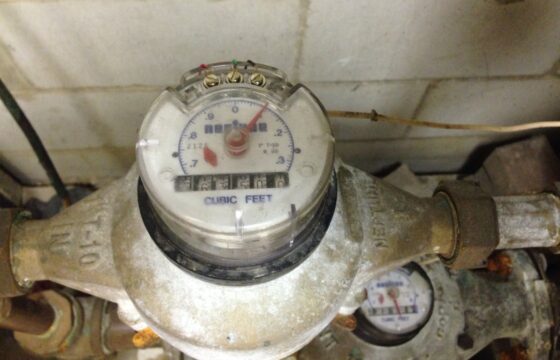
Use our water bill comparison guide to compare matching units and gallons per day. A water meter check can help assess unexplained use under suitable conditions. If an automatic landscape zone is involved, the sprinkler leaking while off guide covers a different valve-and-drainage question.
Keep invoices and dated photos if you ask your utility whether a leak-adjustment policy applies. Eligibility and documentation depend on that utility; repair does not automatically create a credit.
If the leak reached an indoor floor, after repair and cleanup use the leak sensor placement and alert-test record to assess an accessible indoor sensing point. A detector can flag water that reaches its contacts; it does not repair the faucet or prove a concealed leak has stopped.
What should the plumber’s quote include?
Ask whether the proposed work is a hose connection fix, faucet component repair, full wall-faucet replacement, or repair to concealed plumbing. Confirm access requirements, matching replacement dimensions, restoration of finishes, and checking for damage indoors.
A replacement should suit the climate, wall arrangement, and protection requirements. Ask how the installer will verify drainage where relevant and explain seasonal shutdown for that model. A low parts price alone says little about the total job when the connection is inside a finished wall.
Frequently asked questions
Is dripping for a short time after shutoff always a leak?
No. Some frost-proof designs drain retained water after closing. Compare the behavior with the specific model’s guidance; persistent dripping or indoor moisture needs attention.
Can I stop a faucet leak by closing the hose nozzle?
That is not a repair or dependable water isolation. It may leave the hose and faucet under pressure. Close the actual faucet or an appropriate identified supply valve as instructed.
Should I leave the hose attached over winter?
Follow the faucet’s winterizing instructions. Standard frost-proof designs commonly depend on hose removal for drainage. Accessories can also trap water; ask the manufacturer about your arrangement. Our outdoor faucet winterization guide separates standard, frost-free, and unknown setups and explains why the exact model matters.
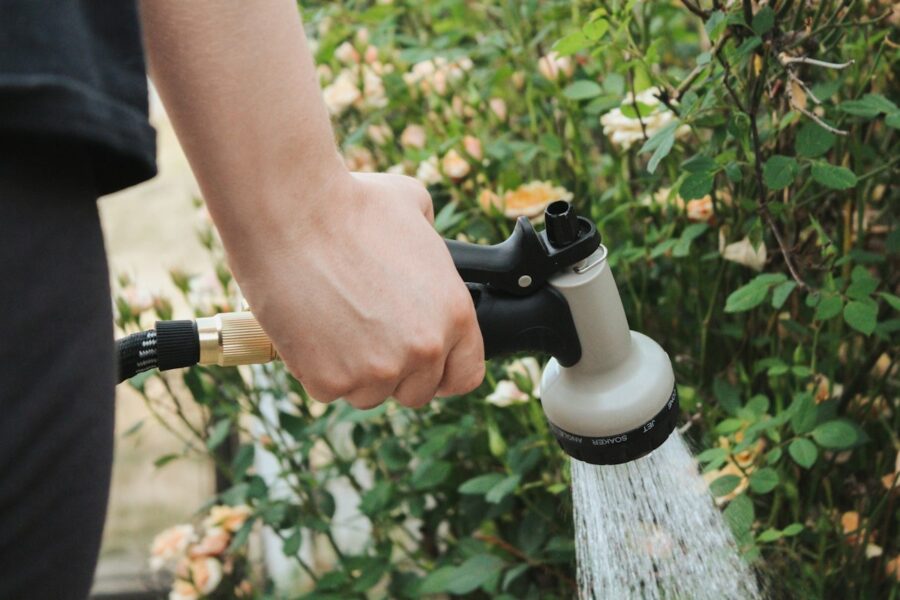
Research-based guidance for US homes; faucet instructions and local requirements take priority. Featured photograph: Giorgio Trovato on Unsplash. It illustrates garden watering, not a confirmed faucet failure or work performed by our team.