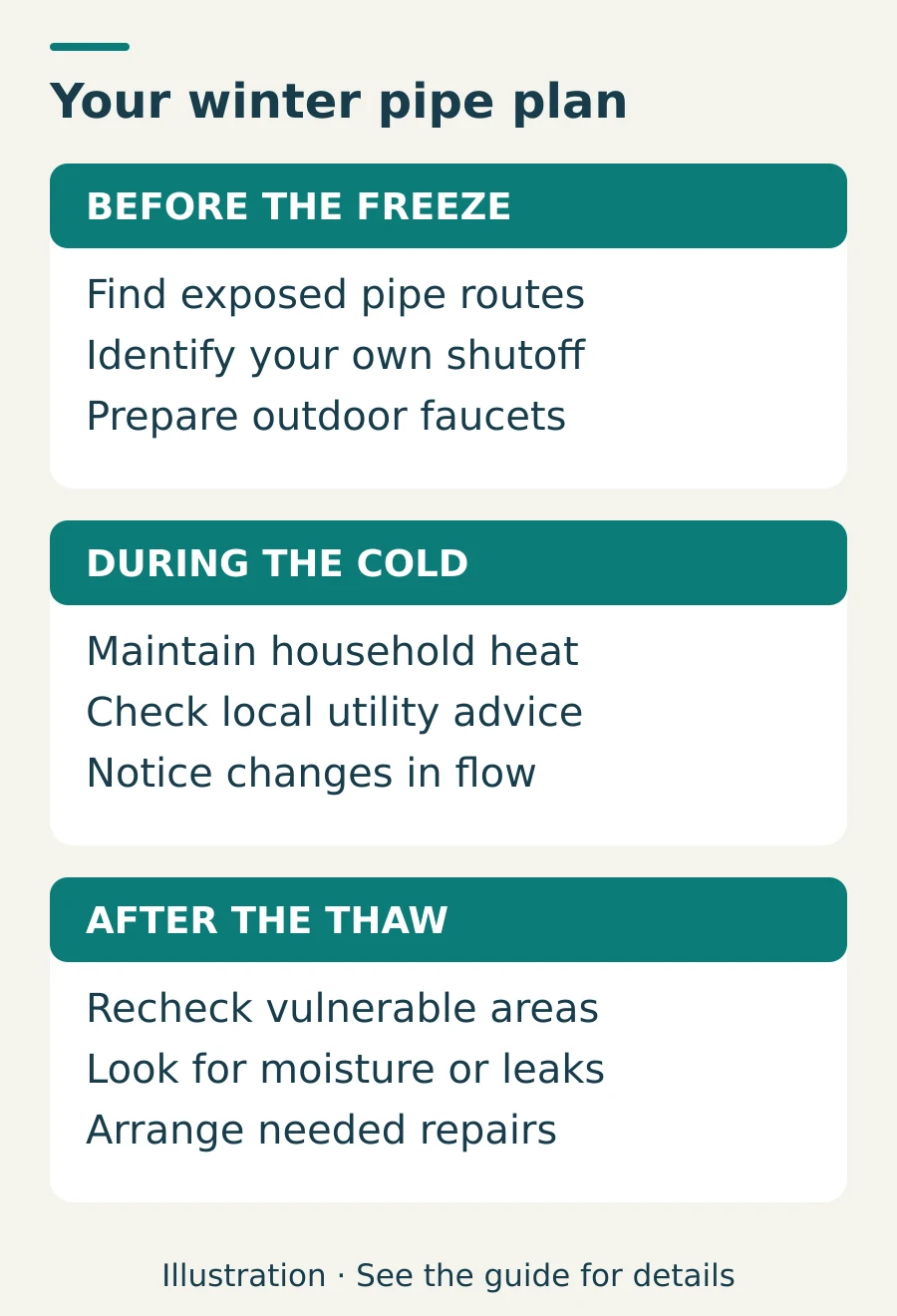
To help prevent frozen pipes, identify the plumbing exposed to cold, prepare outdoor fixtures before freezing weather, and keep reliable heat around indoor supply lines. During a cold snap, follow your local water utility’s current advice and watch for changes in flow. When temperatures rise, inspect vulnerable areas again: returning water can reveal damage that was hidden while a pipe was frozen.
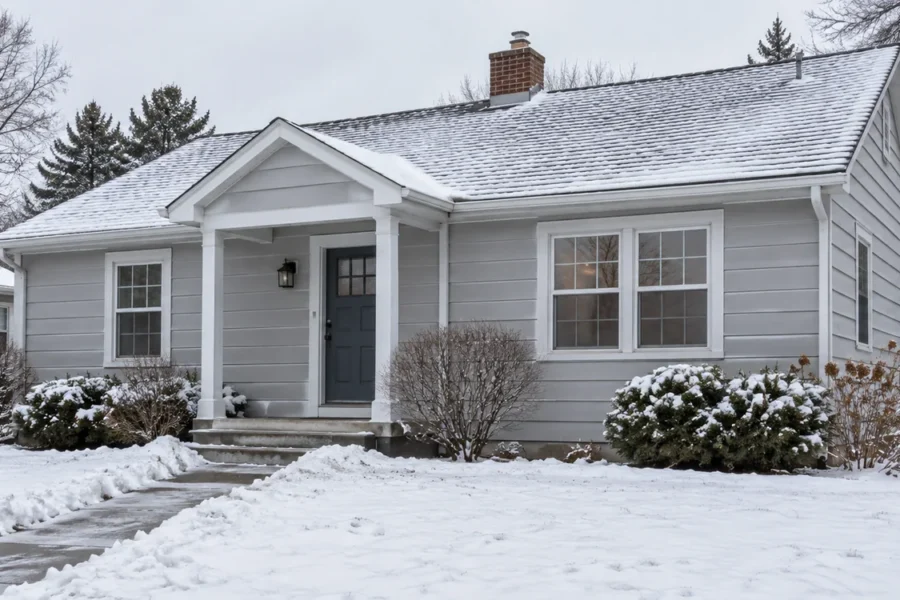
Featured image: AI-generated illustration in a photographic style, not a photograph of an inspected installation.
This is a preparation guide for a normally occupied home with working plumbing. Water spraying, a spreading wet patch, or water near electrical equipment needs an urgent response, not another item on a winter checklist. Stay away from wet electrical areas and contact emergency help when there is an immediate hazard. If safe, use only a clearly identified, accessible customer-owned water shutoff you know how to operate; otherwise call the utility, building manager, or a plumber for help.
Start with where the pipes are, not just the weather app
An outdoor forecast is useful for timing preparation, but it does not tell you the temperature of a pipe hidden behind a kitchen cabinet. A room can feel comfortable while a draft reaches a supply line near an outside wall. Conversely, a short drop in outdoor temperature does not prove that an indoor pipe has frozen.
The American Red Cross identifies exposed outdoor plumbing, unheated spaces, and poorly insulated exterior walls as common trouble areas. Turn that broad advice into a short map of your own home:
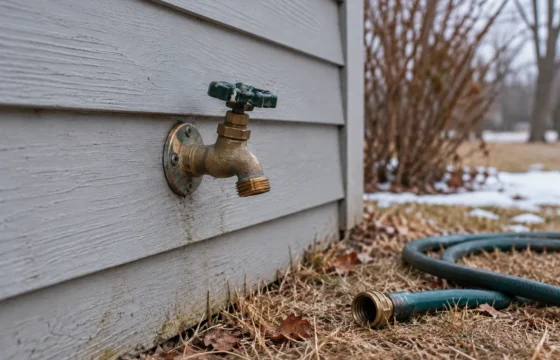
- Outdoor connections: note every hose faucet, including the one behind a shed or beside a rarely used patio.
- Rooms at the edges of the building: note kitchens, laundry areas, and bathrooms with plumbing against an exterior wall.
- Unheated locations: include accessible garage pipes and any known attic, basement, or crawl-space routes. Do not enter an unsafe, wet, or confined space to investigate.
- Past trouble spots: record which fixture lost flow in an earlier winter and whether the underlying cause was actually repaired.
- Recent changes: think about a removed cabinet panel, broken window, open access hatch, insulation disturbed by other work, or a room no longer being heated.
A useful inspection note is specific: “laundry sink, north exterior wall, both supplies visible, sleeve gap near elbow.” That gives a plumber or insulation contractor a much clearer starting point than “the house gets cold.” You do not need to open walls to make this list.
Before a freeze: make a small, property-specific plan
1. Identify the water control you would use in an emergency
Locate your home’s customer-owned main shutoff and keep its approach clear. Check your property’s documentation or ask the building manager or plumber to identify it if you are unsure. A tag saying “water” is not enough when several apartments, irrigation lines, or fire-protection systems share the space.
Write down the location and who to call if it cannot be operated. Do not force a stiff valve, experiment with an unfamiliar control, or turn a utility curb stop or shared building valve. Discovering uncertainty on a mild day gives you time to resolve it before water is escaping.
2. Separate outdoor preparation from indoor protection
Disconnect and drain removable garden hoses and hose-end accessories before freezing weather. Determine the faucet model and whether there is a dedicated indoor shutoff for that outdoor branch. Standard and frost-free faucets do not all have the same winter procedure; use the manufacturer’s instructions for the installed model.
Put “model unknown” on the checklist rather than guessing that a faucet is frost-free because of its handle shape. Irrigation, pools, outdoor showers, and other water-using equipment need their own manufacturer or installer winterization plan. Do not add antifreeze to drinking-water plumbing or attempt a compressed-air blowout as a substitute for that plan.
3. Check insulation and drafts where you can safely see them
Look for missing, loose, damaged, or wet pipe insulation on accessible runs. Use compatible pipe insulation sized for the actual pipe diameter, following the product instructions. Do not cover shutoff handles or conceal a suspected leak beneath a new sleeve.
The U.S. Department of Energy’s Building Science Education guidance explains that exterior-wall protection involves both insulation and air sealing, with cavity insulation between the pipe and the exterior. That is a building-assembly issue, not a reason to stuff insulation blindly into a wall. A recurring cold spot may need a professional assessment of the pipe route and the surrounding wall.
Insulation slows heat loss; it does not create warmth. Ask for a tailored solution if a pipe sits in a space that remains unheated. Do not improvise electrical heat cables or portable heaters around plumbing. Keep required combustion-air openings, appliance vents, and exhaust paths unobstructed.
4. Prepare contacts and a check-in method
Save the utility’s official outage page and emergency number, your building manager’s number if applicable, and a plumber’s contact details. Keep a flashlight accessible. If you will be away, arrange for someone who can reach the property to respond to loss of heat or a leak alert. An alert is useful only when someone can act on it.
During a cold snap: maintain protection and notice changes
Keep normal household heating working and pay attention to rooms containing vulnerable plumbing. Avoid a large overnight thermostat setback during severe cold. Keep a garage door closed when supply pipes run through the garage, without obstructing any required ventilation.
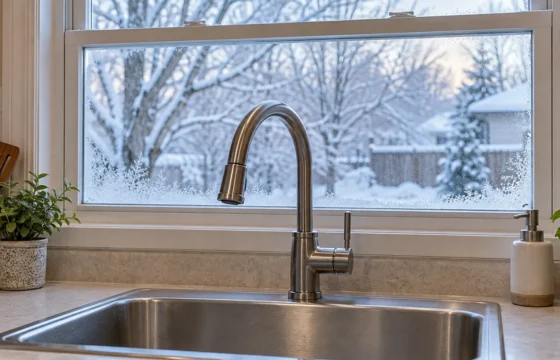
For an accessible sink cabinet against an outside wall, opening its doors can let room warmth reach the pipes. First move cleaners and other hazards out of reach of children and pets. Do not leave an open cabinet where it blocks an exit or creates a trip hazard.
These are supporting measures, not proof that every pipe is protected. Portland Water Bureau’s winter guidance recommends indoor warmth, outdoor faucet preparation, and attention to unheated plumbing areas. Your home’s layout still determines which areas need checking.
During ordinary use, notice whether a normally strong faucet suddenly becomes weak, whether only cold or hot flow changes, and whether the same thing happens elsewhere. You do not need to keep every tap running to “test” the house. Record when a change begins and check the utility’s current service notices.
Should you let a faucet drip to prevent freezing?
Check your own water utility’s current instructions rather than applying a nationwide drip rule. Advice can differ with weather severity, local infrastructure, water supply conditions, and which plumbing is exposed. A recommendation for a particular fixture is not a recommendation to open every faucet or leave an outdoor tap running.
For example, Denver Water’s cold-weather page places its slow-drip advice in a section for a deep freeze of −5°F and below. Philadelphia’s guidance focuses on pipes that have frozen before or cannot be kept warm. Neither example establishes a universal temperature or flow rate for every home.
If your utility advises dripping, follow its directions about which faucet and how much flow, ensure the drain remains unobstructed, and do not leave a basin plugged. Ask the utility or a plumber if you cannot identify which outlet serves the vulnerable run. Dripping is not a repair for insulation defects, a failed heating system, or a pipe that has already burst.
What changes if you are away or the heat fails?
Leaving for several days
Keep heat on and use a setting appropriate for the property and local guidance. The Red Cross gives 55°F as a minimum while away; Denver Water advises above 65°F when leaving for several days in its cold-weather guidance. These are different recommendations, and neither number guarantees that a remote pipe stays above freezing.
Before leaving, confirm the heating system is functioning, let your designated contact know about vulnerable areas, and make sure they can reach the right emergency service. A long-vacant or seasonal building needs a professional winterization plan that accounts for appliances, traps, heating equipment, and any fire-protection system. Simply closing a main valve is not the same as draining and winterizing the building.
Losing heat during freezing weather
Prioritize people and a safe heated place. Contact the heating provider, building manager, or emergency service as appropriate. Tell the plumber how long heat has been lost, where the water supply runs, and whether there are already changes in flow or visible leaks.
Do not improvise thawing with flames, boiling water, or electrical devices in damp areas. Do not shut down or drain unfamiliar water-heating, hydronic-heating, or fire-protection equipment. If the building cannot be kept warm, ask for a system-specific isolation and winterization plan rather than guessing which valves to close.
After temperatures rise: inspect before calling it resolved
Walk the same accessible route you listed before the freeze. Look beneath affected sinks, near visible pipe joints, around the indoor side of outdoor faucets, and at ceilings or walls below vulnerable plumbing. Watch for fresh staining, damp insulation, drips, puddles, or an unexplained water sound.
San Antonio Water System specifically warns that cracked pipes can leak after warmer weather returns. Normal flow at a faucet does not rule out a leak elsewhere. If you find one, stop using the affected area, use the known customer-owned shutoff only if safe, and arrange repair. Keep away from wet electrical equipment.
Make a second observation when the plumbing is next used normally. An outdoor faucet can leak inside the wall only while running, so its spring return to service deserves an attended check. A recurring winter problem is a reason to fix the vulnerable route, not just repeat the same emergency routine next year.
Keep these observations with your home plumbing maintenance checklist so the next seasonal check starts with the actual trouble spots.
Choose the next step for your situation
- Winterize an outdoor faucet: identify a standard or frost-free model and use its correct drainage procedure before freezing weather.
- Check possible signs of frozen pipes: if flow has already changed, check hazards, compare fixtures, and review utility notices before deciding who to call.
Common questions about preventing frozen pipes
At what temperature do household pipes freeze?
Water freezes at about 32°F, but an outdoor reading is not a reliable prediction of when a particular pipe will freeze. Exposure, duration, drafts, insulation, and available building heat matter. Prepare before freezing weather and follow local alerts rather than waiting for a single threshold.
Does a faucet cover make an outdoor pipe freeze-proof?
No. A cover is a supplementary layer. It does not replace the correct drainage procedure, disconnecting ordinary hoses, a suitable installation, or protection of the pipe inside the wall.
Can a hot-water pipe freeze?
Yes. Do not exclude a hot-water supply line from a winter inspection just because it carries hot water during use. Include both supplies wherever plumbing is exposed to cold.
Does no water always mean a frozen pipe?
No. A utility interruption, closed valve, fixture fault, or another supply problem can look similar. Cold weather is an important clue, not a diagnosis. Compare which fixtures are affected and check official service notices before deciding who needs to investigate.
Keep the plan simple: identify the vulnerable locations, prepare the correct equipment before the freeze, maintain safe heat, and recheck for leaks when conditions change.