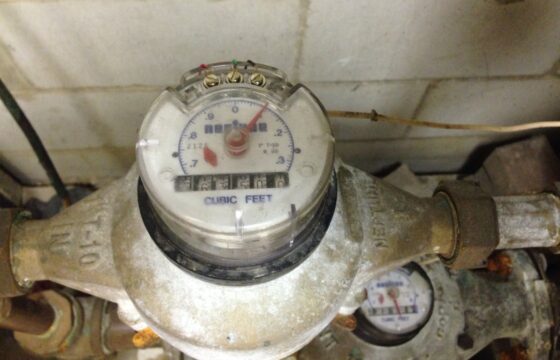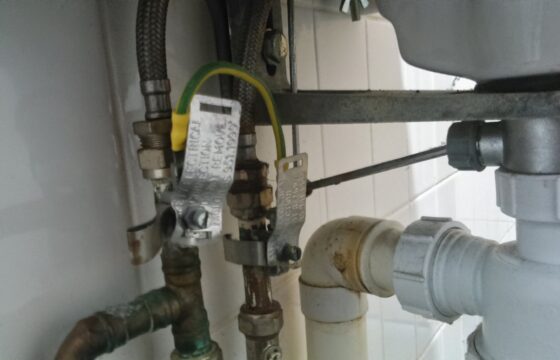
The main water shutoff valve is often near where the supply pipe enters the home, such as a basement wall, garage, utility area, or an accessible location near the foundation. Layouts vary, and some homes lack an accessible valve. Identify and label the household water valve before an emergency rather than turning unfamiliar controls.
If water is flooding the home now, stay out of standing water. Do not enter a flooded basement or reach through water for a valve, plug, or breaker panel. PSE&G’s flood-safety guidance warns that water and appliances surrounded by it may be electrically charged. Closing the water supply does not remove that electrical danger; get qualified help to make the area safe.
From a safe, dry place, call your water utility, building manager, or an emergency plumber if you cannot safely reach a known shutoff or water keeps spreading after it is closed. Do not delay that call while searching through every possible location.
For non-emergency checks after identifying your shutoff, use the plumbing troubleshooting guide to choose the path matching the symptom.
Look near the water supply entry point
Start with the home inspection report, plumbing drawings, or information left by a previous owner. A report may include a photograph and a location description. Verify it against the current layout, especially after renovations.
Fairfax Water’s household plumbing guidance identifies the foundation entry point as a common location for the main valve and recommends marking it so household members can find it. Use the pipe route as a clue, not a guarantee that every house has the same arrangement.
| Home layout | Accessible places to check | When to get help |
|---|---|---|
| Basement | Visible supply pipe near the foundation entry; utility area | The pipe disappears behind finishes or several valves are unmarked. |
| Slab foundation | Garage, utility closet, or a visible exterior entry point | No clearly identified household valve is accessible. |
| Crawl space | Records or an accessible valve outside the crawl area | Access requires entering a cramped, wet, or unsafe space. |
| Apartment or condominium | Unit documentation and the property manager’s instructions | The control is shared or behind a locked service door. |
| Manufactured or older home | Owner records and accessible supply-entry areas | The home may lack a convenient master shutoff. |
The Regional Water Providers Consortium notes that some apartments, manufactured homes, and older homes do not have a readily available household shutoff. If you cannot find one, a plumber or the utility can help establish the correct emergency procedure.
Identify the valve by what it controls
Utility video: locating and labeling a main shutoff
Source: Louisville Water Company. Use this video to recognize common locations and the idea of labeling the valve before an emergency. Your home may be arranged differently. Do not force a stuck valve or operate a utility-owned curb stop unless your utility explicitly authorizes it.
Confirm scope before relying on a valve
- Trace existing records: find the labeled household supply entry and any separate irrigation or building branches.
- Distinguish fixture isolation: the small valve beside a toilet or beneath a sink usually serves that fixture, not the whole property.
- Record access: photograph the identified household valve, label what it serves, and share its location. Have a stuck, corroded, unverified, or shared valve assessed before relying on it.
The Regional Water Providers Consortium’s emergency shutoff guide explains common locations and household preparation. Utility-owned street valves and building-wide systems need the responsible provider’s instructions.
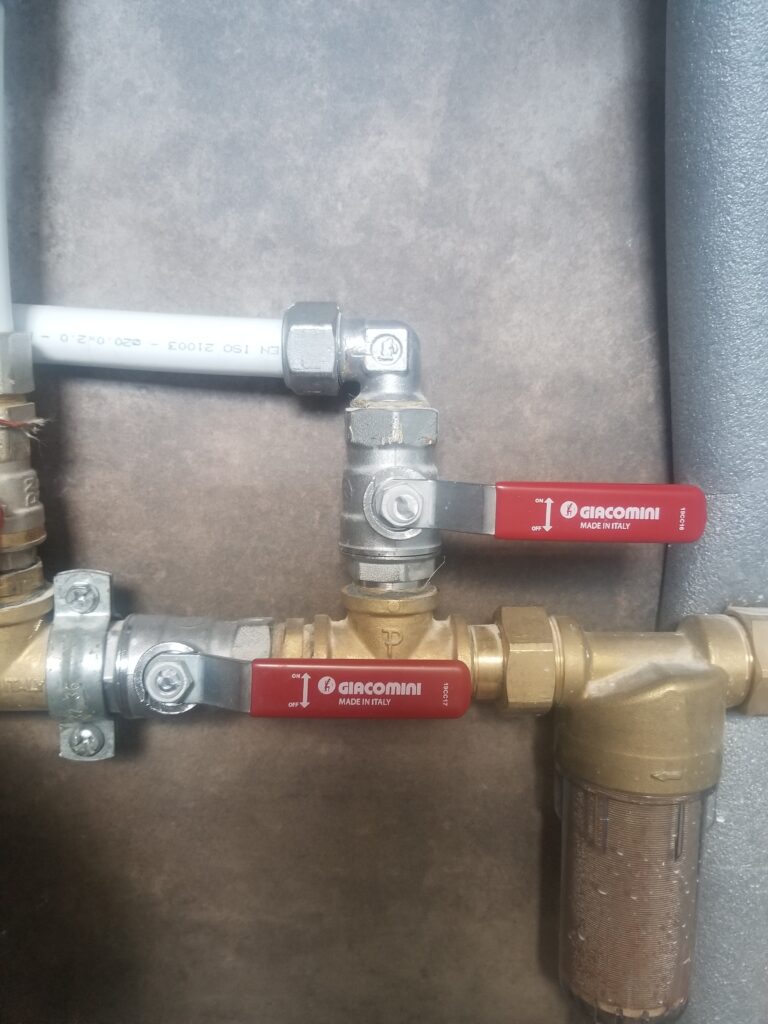
The main household valve controls the domestic water supply downstream of it. A smaller fixture valve under a sink or beside a toilet normally controls that fixture only. An outdoor irrigation valve may control a separate branch. A valve next to the water heater may isolate the heater rather than the entire house.
Do not identify a valve by handle color alone. Plumbing labels, visible pipe routing, installation records, and confirmation from a qualified person are more useful. A regulator, backflow device, or capped test port is not simply another handle to try.
Keep gas valves, boiler controls, well-pump equipment, and fire-sprinkler controls outside this trial-and-error search. In a home with fire sprinklers, ask the installer or plumber to identify a domestic shutoff that preserves required fire protection. In a shared building, contact management rather than operating an unmarked building valve.
A good label is specific: “Domestic water — confirmed by plumber,” accompanied by a date and a photograph in your home records. An old handwritten “main” label with no known history deserves confirmation.
Do not confuse your valve with the utility’s street valve
A meter box or curb stop may be near the sidewalk or property boundary. It is not automatically a homeowner-operated control. Ownership and permission vary by water provider, and a locked, sealed, or utility-controlled device should not be disturbed.
The Regional Water Providers Consortium advises customers to check their provider’s rules before attempting a street shutoff. Save the utility’s emergency number and ask what to do if your interior valve cannot stop a leak. This conversation is easiest before an emergency.
You can read about a water meter leak test without treating the meter’s shutoff as a repair tool. Reading the meter and operating utility valves are different tasks.
Check access and condition before operating it
Look from a safe, dry location. Is the handle reachable without climbing over storage? Is there fresh moisture, heavy corrosion, cracked piping, or a damaged handle? Does reaching it require moving electrical equipment? These are reasons to arrange professional help rather than force a test.
For a known, sound household valve, follow the building’s or installer’s instructions. A conventional quarter-turn ball valve commonly has its lever parallel to the pipe when open and perpendicular when closed. A conventional wheel-operated valve typically closes clockwise. The actual valve type and markings take priority over these general patterns.
Never use an extension bar, hammer, or extra leverage on a stuck handle. Stop if the pipe moves or the valve begins leaking. Do not loosen packing nuts, remove handles, or dismantle the valve with the supply under pressure.
If you want to verify operation during routine maintenance, ask a plumber to demonstrate the valve and confirm the result at a suitable faucet. This is especially useful when the valve is old, the piping route is uncertain, or fire protection and shared supplies are present.
What to expect when the water is shut off
Some water can remain in the plumbing after the incoming supply is closed. An initial flow from a faucet does not automatically prove that the valve has failed. Continued flow needs interpretation in light of stored water, building layout, and whether the correct valve was identified.
Do not begin disassembling a leaking fixture just because the main handle appears closed. Water isolation and pressure release must be verified for the specific repair. A toilet tank, water heater, or other reservoir may still contain water.
For a prolonged shutoff, get instructions for water heaters, heating equipment, pumps, and other water-dependent systems. Fairfax Water specifically recommends consulting a plumber or HVAC professional about long-term appliance shutdown. Do not improvise electrical or gas shutdown and restart steps.
Reopening also deserves care after a leak. Confirm that the damaged part has been repaired and that fixtures are ready before restoring supply according to professional instructions. If water immediately escapes again, stop and contact the person handling the repair.
Prepare a household water emergency note
Save a short record where other household members can reach it without logging into your personal phone. Add a printed copy if practical. Include photographs showing both the valve close up and the wider path to it.
| Field | What to write |
|---|---|
| Valve location | Room, wall, nearby landmark, and access instructions |
| Identification | Who confirmed it and which supply it controls |
| Operation | The verified procedure for this valve; any restrictions |
| Emergency contacts | Water utility, property manager, and plumber |
| Important equipment | Fire sprinklers, well system, or appliances needing special instructions |
| Last check | Date, condition, and any unresolved access problem |
Include this record in your home plumbing maintenance checklist. A nearby water leak sensor can help alert you to moisture, but an ordinary sensor does not shut off water. Know whether your actual device only alarms or operates a compatible automatic valve.
When a plumber is needed and what affects cost
Get professional help if the valve is missing, inaccessible, stuck, leaking, or does not reliably isolate the intended supply. For an active leak that cannot be safely controlled, contact the utility or building emergency service promptly.
Ask for a USD estimate that distinguishes identification and demonstration from replacement or relocation. Replacement may require coordination with the utility to isolate the upstream supply. Access, pipe condition, shared service, and any required permits can affect the scope. Confirm who arranges that coordination before work begins.
If the immediate problem is localized cabinet moisture, our under-sink leak guide helps describe the source. Do not approve a new main valve solely because a faucet washer is dripping, unless the existing main valve independently needs attention.
Frequently asked questions
Is the main valve always next to the water meter?
No. The meter may be outdoors while the household valve is indoors, and some buildings have different arrangements. Use records and confirmed pipe routing.
Can I use the valve beside the water heater?
Only after identifying what it controls. It may isolate the heater or another branch, leaving the rest of the home’s cold-water supply on.
What if I rent?
Ask the landlord or property manager for the unit’s emergency instructions and an after-hours contact. Do not operate shared or restricted controls without authorization.
Should I turn every valve to find the right one?
No. Record what you can see and get the correct valve identified. Trial-and-error operation can interrupt shared services or essential equipment.
Featured photo: Steven Ungermann on Unsplash. Stock home-interior image used for context; it does not identify a water shutoff valve.