A pressure regulator, also called a pressure-reducing valve (PRV), can be involved when water pressure is too high, too low, or unstable across many fixtures—but those symptoms are not proof that the regulator has failed. Filters, leaks, utility pressure, service valves, pipe restrictions, and household demand can create similar patterns.
This guide helps you gather evidence before adjustment or replacement. It does not provide a universal screw-setting procedure because PRV designs, pressure ranges, service conditions, and local code requirements vary.
Common patterns that can point toward a PRV
| Pattern | Why the PRV may be considered | Other possibilities and next step |
|---|---|---|
| High static pressure throughout the home | PRV may be absent, misadjusted, or not controlling downstream pressure | Utility pressure zone or thermal expansion. Start with measuring before assuming the pressure is high. |
| Low pressure at many fixtures | PRV or its strainer may be restricted or malfunctioning | Filter, partially closed valve, leak, or corroded piping. Compare the whole-house low-pressure pattern. |
| Good pressure with one fixture but major drop under demand | PRV flow performance may be poor | Pipe/service restriction or undersized supply. Use the multiple-fixture observation guide. |
| Pressure varies unpredictably | Regulation may be unstable | Utility fluctuation, well/pump controls, or thermal expansion. Label static and flowing readings separately and record when each was taken. |
| Pressure remains high despite a PRV being installed | Valve may need service or replacement | Incorrect test point or closed-system pressure rise. Review pressure changes around water heating before naming the cause. |
Find the PRV and identify the exact model
Fairfax Water notes that residential PRVs are typically installed where the water line enters the home. Depending on the building, that may be near a basement service entrance, meter area, or other main-supply location.
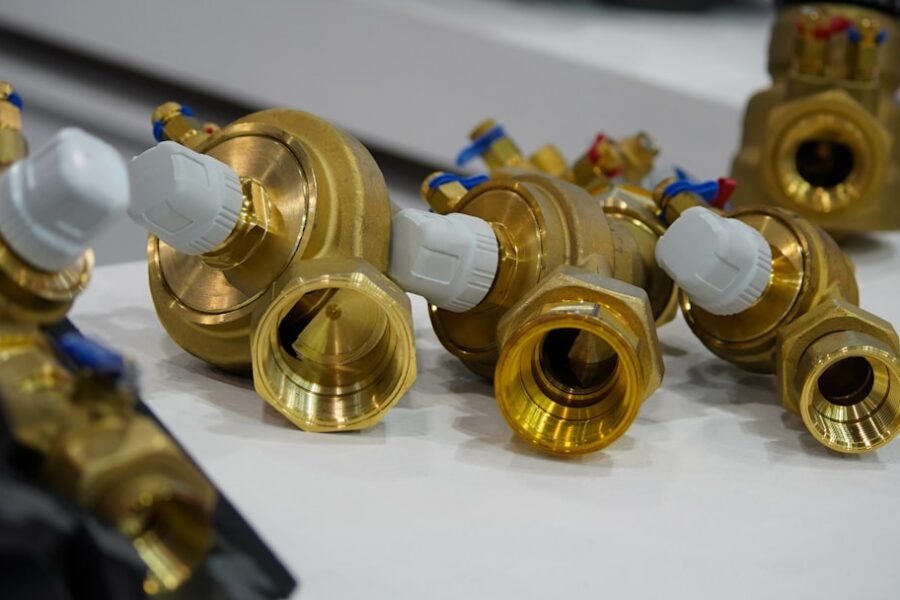
Photograph the valve and model markings without disturbing it. Do not assume every bell-shaped brass valve has the same adjustment direction, pressure range, strainer design, or repair procedure.
Record pressure before touching the adjustment
Use a gauge and record static pressure as described in our water pressure test guide. If the complaint appears when fixtures run, also record the conditions under which pressure changes. Our guide to pressure drops during multiple-fixture use explains why flowing observations matter.
If the home pressure is high, see High Water Pressure in a House. If pressure is low everywhere, see Low Water Pressure Throughout the House.
If your concern is a bang when a faucet closes or an appliance stops filling, use the guide to pipes banging when water shuts off to record the timing. Keep that observation separate from your pressure readings.
A strainer can create a restriction on some PRV models
Some residential PRVs include an integral strainer. Zurn describes its NR3XL and 20XL models as using stainless-steel screens to catch sediment and debris before it accumulates in the valve. That means low downstream flow can sometimes involve debris as well as the regulating mechanism.
This does not mean every homeowner should open the PRV. Strainer access, isolation requirements, replacement seals, torque, and reassembly are model-specific. If the valve cannot be safely isolated or the instructions are unclear, use a plumber.
High pressure and low pressure need different reasoning
A PRV that is not reducing high inlet pressure is a different problem from a valve that creates excessive downstream pressure loss. Do not use the same “turn the screw” response for both.
EPA WaterSense’s Service Water Pressure technical sheet recommends incoming service pressure around 45–60 psi for efficient operation and notes that many U.S. plumbing codes require pressure regulation when supplied pressure exceeds 80 psi. Those numbers provide context, not a universal adjustment setting for every existing home.
Thermal expansion can mimic regulator trouble
Pressure that rises while no water is being used—especially after water heating—can involve thermal expansion in a closed system. EPA WaterSense’s service-pressure guidance specifically advises consulting local codes about thermal expansion when a PRV creates a closed system.
If pressure only spikes after heating cycles, do not assume the PRV is “letting pressure through” without checking expansion control. Never disable a water-heater relief valve.
What to send a plumber before a PRV service call
Copy this pressure-service record
Copy these lines into your notes. Use observations and readings already collected safely; write “unknown” or “not measured” when appropriate. Keep the current valve setting unchanged while gathering the baseline. Do not delay help for an active leak to complete the record.
Pressure pattern: [high / low / variable / unknown]
First noticed, date and time: [fill in]
Affected fixtures and floors: [fill in / unknown]
PRV manufacturer and model: [fill in / unknown]
Gauge location, before or after PRV if known: [fill in / unknown]
Static reading with water use stopped: [psi / not measured]
Reading during normal use and fixtures in use: [psi, fixtures / not measured]
Rise after water heating already observed: [yes / no / not observed]
Filter, softener, booster, or well equipment present: [fill in / unknown]
Recent utility, plumbing, or filter work: [date, work / none known]
Leaks, water hammer, or hose concerns already noticed: [fill in / none noticed]
Valve-label or gauge photos already taken safely: [available / none]
Repair, rebuild, or replace?
Some PRVs have manufacturer repair cartridges, strainers, or rebuild kits; others may be more practical to replace. Zurn publishes model-specific maintenance instructions and repair kits for several residential PRV lines. The correct choice depends on valve model, age, condition, accessibility, code requirements, and labor.
Ask for a diagnosis and written scope rather than approving “replace the regulator” solely from a symptom description. These questions help you compare the proposed work:
- What supports the diagnosis? Ask which findings and pressure readings point to the PRV, and which other possible causes were checked.
- How is thermal expansion managed? Ask whether this exact PRV has a bypass, whether upstream check/backflow devices or inlet pressure limit it, and what expansion-control arrangement is required for this system.
- What work is included? Ask for the exact model or service parts, access requirements, and separate descriptions of valve work and any expansion-control work.
- How will the result be checked? Ask which pressure conditions will be verified afterward, what remains unresolved, and whom to contact if the symptom returns.
Frequently asked questions
Can a bad pressure regulator cause low water pressure?
Yes, but so can filters, leaks, service valves, corroded piping, and low utility pressure. Confirm the pattern before replacing the PRV.
Can a failing PRV cause high pressure?
A regulator that no longer controls downstream pressure can be part of a high-pressure problem. Also consider utility inlet pressure and thermal expansion.
Does a PRV’s built-in bypass replace thermal expansion control?
Do not assume it does. Some models have a bypass that lets expanded water return toward the supply under specified conditions. Its usefulness depends on the installed model and system: an upstream check valve or backflow preventer can block that return path, and high inlet pressure can limit relief. Watts’ pressure-reducing valve guide explains why separate expansion control may still be needed. Have a plumber confirm the arrangement and local requirements; do not change valves to test the bypass.
A PRV bypass never replaces the water heater’s temperature-and-pressure (T&P) relief valve. Never cap, disable, or obstruct that valve or its discharge piping.
Should I adjust the PRV before measuring pressure?
No. Record the existing condition first. Otherwise you lose the baseline needed to understand what changed.
Sources and related guidance
- EPA WaterSense: Service Pressure
- Fairfax Water: Pressure Reducing Valve Information
- Zurn Wilkins NR3XL PRV
- Zurn Wilkins 20XL PRV
Research-based educational guide. Pressure-control service is model- and code-dependent; use a qualified plumber when isolation or disassembly is required.