High water pressure is more than a “strong shower.” Excessive service pressure can increase water use and place extra stress on hoses, fixtures, valves, appliances, and piping. The useful first step is to measure pressure with a gauge, record the conditions, and compare the result with guidance from your utility and plumbing professional.
EPA WaterSense recommends incoming service pressure around 45–60 psi for efficient household operation and notes that most U.S. plumbing codes require pressure regulation when supplied pressure exceeds 80 psi. Local rules vary, so do not treat a national guideline as a substitute for your local code.
Measure before assuming the pressure is high
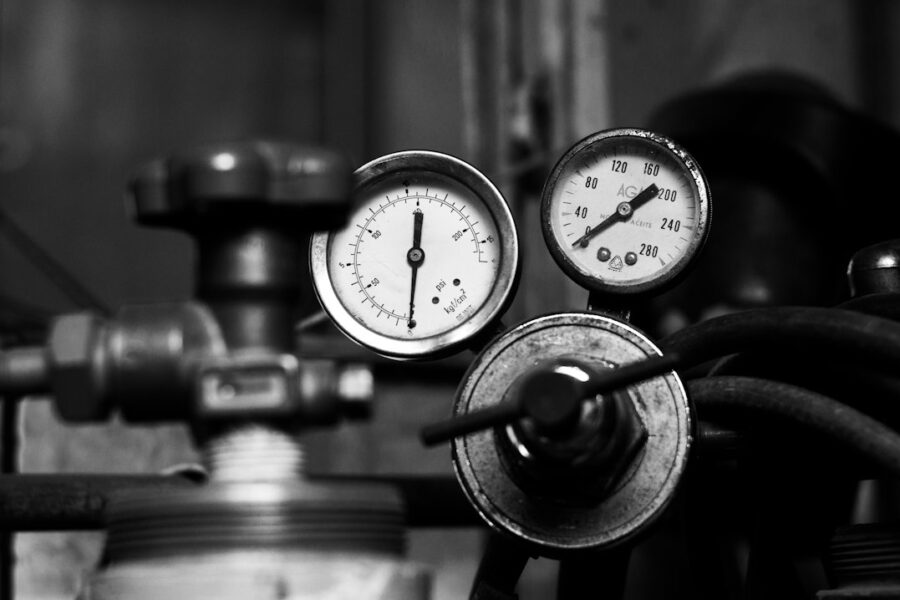
A powerful spray does not measure pressure. Choose a water-pressure gauge that matches the connection and operating limits, then follow our five-step home water pressure test guide. Record the location, time, whether water was being used elsewhere, and the reading.
Record whether the test point is before or after the pressure-reducing valve (PRV). Watts explains that a PRV reduces incoming pressure for the plumbing supplied through it. The practical implication is that a high reading before the valve does not establish the pressure at fixtures after it. Do not infer the pipe route just because the faucet is outdoors. If the route is unknown, write “before or after PRV unknown” and have the test location identified before using the result to choose a repair.
If the reading is unexpectedly high and there is no active leak, relief-valve discharge, or other immediate hazard, repeat it under comparable conditions without adjusting the regulator. Otherwise, stop testing and arrange professional help rather than collecting more readings. Pressure can vary with time of day, utility operations, elevation, and thermal expansion.
What signs can accompany high pressure?
| Observation | Why it matters | What it does not prove |
|---|---|---|
| Repeated high gauge readings | Provides direct pressure evidence | Does not identify which component needs service. |
| Hose or appliance connections failing prematurely | High pressure can add stress | A failed hose may also be old or damaged. |
| Water hammer/noisy valves | May accompany pressure or velocity problems | Noise alone does not diagnose high pressure. |
| Toilet/faucet valves repeatedly leaking | High pressure can worsen wear and leakage | Each fixture can also have its own failed seal. |
| Pressure rises when no water is being used | Thermal expansion may be relevant in a closed system | Do not adjust safety devices based on one reading. |
Why readings above 80 psi deserve professional attention
EPA WaterSense’s Service Water Pressure technical sheet says supply mains can reach 100 psi or more and that high pressure can damage plumbing, fixtures, and appliances while increasing water consumption and leak risk. Many U.S. plumbing codes use 80 psi as a point where pressure regulation is required.
Charlotte Water similarly tells customers that homes in high-pressure areas may exceed 80 psi and recommends a licensed plumber install a pressure-reducing valve where needed. Fairfax Water describes a PRV as a device that reduces incoming residential pressure to below 80 psi.
A pressure-reducing valve may be part of the solution
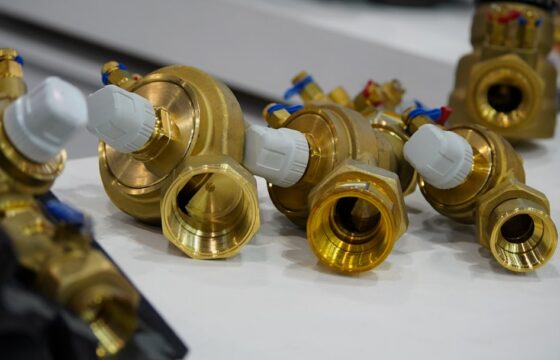
A PRV is commonly installed near the point where the water service enters the home. Its job is to reduce higher inlet pressure to a controlled downstream pressure. If a PRV is already present but downstream pressure remains high, record the model and pressure before asking a plumber to service or replace it.
For model identification and the observations to bring to a service call, see our water pressure regulator symptoms guide. The symptom list helps organize the investigation; it does not establish that the PRV has failed.
Do not simply turn the adjustment screw downward. Incorrect adjustment can create poor flow, mask a failing valve, or interact with a closed plumbing system that requires thermal-expansion control.
Do not overlook thermal expansion
EPA WaterSense’s service-pressure guidance notes that installing a PRV can create a closed system, so thermal expansion may need to be addressed according to local plumbing codes. This is one reason a pressure reading that rises while no fixtures are open should be evaluated carefully instead of treated as a simple regulator-setting problem.
Do not alter a water-heater temperature/pressure relief valve or cap a dripping relief discharge. That device is a safety component, not a pressure-adjustment control.
If the relief discharge is dripping or releasing water, keep clear of the outlet and arrange prompt assessment by a qualified plumber or water-heater technician. Discharge can be hot enough to scald, and a substantial hot-water release may involve overheating rather than ordinary thermal expansion. Do not operate the relief valve to diagnose the problem or wait for another heating cycle to reproduce it. Keep people away and seek emergency help if hot water, steam, or flooding creates an immediate danger.
Manufacturer references: A. O. Smith explains pressure- and temperature-related relief discharge; the GeoSpring owner’s manual, page 9, warns about scalding and directs owners to professional help for periodic discharge. Follow the manual for your installed heater.
What to record before calling a plumber
- Static pressure reading and gauge location.
- Time of day and whether irrigation or other water uses were running.
- Whether a PRV is present and its model label.
- Any recent utility work or neighborhood pressure change.
- Leaks, pipe bangs when water shuts off, failing hoses, or repeated fixture-valve problems.
- Whether pressure appears to rise after water heating cycles.
This record helps distinguish service pressure, PRV behavior, and possible thermal expansion without guessing. For a copyable version, use the pressure-service record and include the high readings, gauge location, and timing you observed. If work is proposed, use the questions about diagnosis, repair scope, and verification before approving it.
When to contact the utility
If the home has no PRV and service pressure is much higher than expected, ask the utility what static pressure range is typical for your location. Some utilities operate different pressure zones and cannot adjust pressure individually at each home. A licensed plumber can then determine whether pressure regulation is appropriate.
Frequently asked questions
Is 80 psi too high?
It is a common regulatory threshold in U.S. plumbing guidance, but local code controls. EPA recommends a lower 45–60 psi service range for efficient household operation.
Can high pressure cause leaks?
High pressure can increase stress and water use, but a leak still needs its own diagnosis. Do not attribute every drip to pressure without checking the failed connection or seal.
Can I lower pressure by partly closing the main shutoff?
No. A shutoff valve is not a substitute for a properly selected pressure-regulating device.
Sources and related guidance
- EPA WaterSense: Home Maintenance — Service Pressure
- EPA WaterSense Technical Sheet: Service Water Pressure
- Charlotte Water: High Water Pressure
- Fairfax Water: PRV Information
Research-based educational guide. Check local plumbing requirements and use a qualified plumber for pressure-control work.