A sprinkler head leaking when off may be releasing water left in the zone piping, or a valve may still be passing water. Low-head drainage eventually stops as the pipe empties; a valve leak can continue. Note which head leaks and whether flow stops, then arrange repair if water keeps appearing.
For water appearing somewhere else, compare the visible-leak troubleshooting paths before applying an irrigation-valve procedure.
First identify what “off” means
There is a difference between a scheduled watering cycle ending, the controller being set to off, and the irrigation water supply being physically isolated. A controller tells valves when to operate; its display does not prove that every valve has closed mechanically.
Check the controller’s normal user display and schedule, without opening its electrical compartment. Note the active station, any manual watering command, and whether multiple programs are scheduled. A cycle-and-soak schedule may intentionally pause and resume. Do not erase the programming before documenting it.
If water is flooding toward the house, undermining soil, or reaching electrical equipment, stop the routine investigation. Use only a clearly identified irrigation shutoff that is safely accessible and works normally, or call the irrigation provider, plumber, or building manager. Do not operate unfamiliar backflow test cocks or valves serving shared or fire-protection systems.
Compare drain-down with water passing through a valve
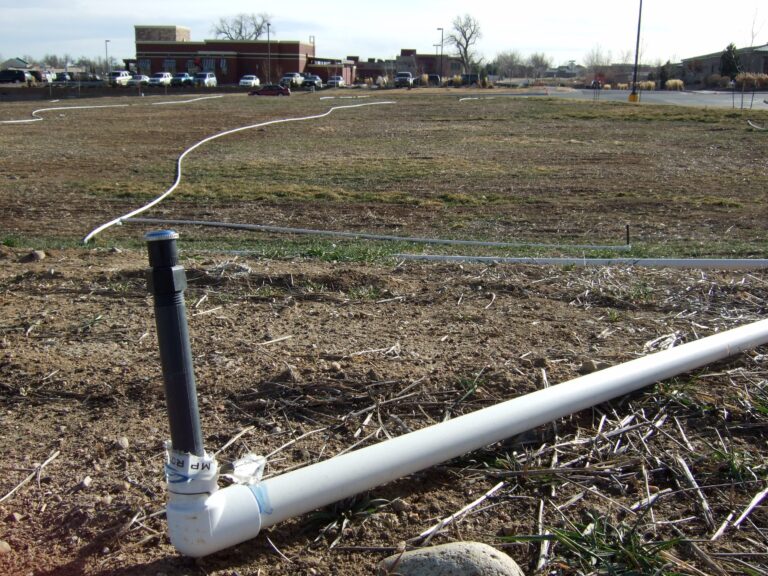
Why the distinction matters: water left in the lateral piping can drain through a low head after shutdown. Continued supply through a zone valve is a different cause. Hunter explains both patterns; a compatible sprinkler check valve can address suitable drain-down but does not repair a leaking zone valve. Observe installed equipment from the surface; do not dig up a pipe or open a valve to match this picture.
| Observed pattern | What it may suggest | Next step |
|---|---|---|
| A low head drains after watering, then stops. | Water retained in the lateral piping may be draining. | Use the check-valve selection checks to ask whether a compatible check valve suits the sprinkler and elevation difference. |
| A head keeps weeping while the zone should be idle. | The zone valve may still be passing supply water. | Have its operating state and sealing checked using the zone-valve service questions; replacing a nozzle does not fix the zone valve. |
| Several heads continue spraying. | A program or manual command may still be active, or a valve may not have closed. | Record the controller display and confirm what off means; seek service if normal shutdown fails. A display reading off is not physical water isolation. |
| The soil stays wet without visible discharge from a head. | Rain, runoff, a buried leak, or another source could be involved. | Record the location and timing; do not dig or open a flooded valve box to guess the cause. |
| The sprinkler is connected to a garden hose. | The hose faucet or retained hose water may be relevant instead of an automatic irrigation valve. | Use the outdoor faucet shutoff checks. |
No universal time cutoff: pipe volume and slope vary. Continuous waste, flooding toward a building, or unsafe ground is a reason to stop routine observations and obtain help, not wait for a timer.
Hunter close-up: what a zone-valve fault can look like
Hunter’s technical demonstration, excerpt approximately 0:25–1:14, shows the diaphragm and debris inside a valve. It explains why a wet sprinkler head can originate at the zone valve. In the full demonstration the irrigation water supply is shut off before disassembly. Treat this as component identification; valve opening and repair require the correct model instructions and safe isolation. Watch the source video on YouTube.
If the zone valve is leaking, does it need cleaning or replacement?
Hunter identifies debris at the diaphragm as a common cause of water passing a closed zone valve. After that valve is confirmed as the source, service can involve cleaning its internal parts; visible diaphragm damage may require a replacement diaphragm assembly. A wet head alone does not establish which repair is needed.
The technician should first rule out a watering command or manual-open setting, then follow the exact valve’s service procedure with the water supply isolated and pressure relieved. Controller “off” does not make the valve safe to open. Ask whether the inspection found debris, damaged sealing parts, or another fault, and have closure checked after repair before replacing other heads.
Why replacing the sprinkler head may miss the cause
The head is where you see water emerge, but it is not necessarily the part controlling supply to the zone. Replacing a nozzle changes that outlet; it does not establish that the upstream valve is closing.
Which check valve stops low-head drainage?
After low-head drainage is confirmed, match the sprinkler body and the vertical elevation difference the check valve can hold. This rating is not horizontal pipe length or spray distance. For example, Hunter’s Pro-Spray drain check option is rated for up to 10 feet of elevation; Rain Bird’s 1800 SAM models hold up to 14 feet of head and specify bottom-inlet installation. Those limits and parts are model-specific.
Ask the installer to confirm the body, inlet arrangement, and site elevation before choosing a retrofit or replacement. A pressure-regulated spray body controls outlet pressure during watering; a drain check valve retains water after shutdown. Some products combine both features. Neither repairs an upstream zone valve that continues passing water.
Do not cap the wet head simply to move the symptom out of sight. That may redirect where water appears while leaving the actual problem unresolved. Similarly, do not extend watering times to compensate for a poorly performing head before checking for damage or a supply problem.
Make a simple observation record from the surface
Stay on stable ground and keep clear of traffic, electrical equipment, and visibly undermined areas. You do not need to open a buried valve to provide useful information.
- Record the station number or name shown on the controller.
- Note the time the scheduled cycle ended and whether a manual command was active.
- Photograph the affected head and a wider view showing its position on the slope.
- Note whether one head, several heads, or only the surrounding soil is wet.
- Record whether flow tapered off, stopped, or continued when observed.
- Tell the provider about recent repairs, winter startup, construction, or unusual water bills.
For example, “The lowest head by the driveway drained after station 3 finished and was dry at the next observation” suggests a different starting question from “That head was still weeping before any scheduled watering the next morning.” These are illustrative notes, not a diagnosis based on elapsed time alone.
Do not deliberately open a valve box filled with water or reach into it. Do not unscrew a solenoid, loosen bleed screws, or take a valve apart under pressure. The manufacturer’s service procedure and safe isolation are necessary for that work.
Copy this irrigation leak observation record
This worksheet organizes the observations above for a service call. Record what you can see from a safe surface; an unknown item can stay unknown. Do not run extra watering cycles or open equipment to fill a blank.
IRRIGATION LEAK OBSERVATION
Date and time: ___
Supply: household meter / separate irrigation meter / well / unknown
Controller station or zone name: ___
Last scheduled cycle ended: ___
Display at observation: watering / paused / off / unknown
Manual watering command or extra start time noted: ___

WHAT IS WET
Location: one head / several heads / soil only
Head or wet-area location and photo filename: ___
First observation: time ___ | flow decreasing / continuing / stopped
Later safe observation, if available: time ___ | flow ___
Indoor moisture, unsafe ground, or water near electrical equipment: ___

CONTEXT AND FOLLOW-UP
Recent repair, seasonal startup, or schedule change: ___
Action already taken or service contacted: ___
Technician's identified cause and proposed work: ___
Repair date and shutdown behavior checked afterward: ___
Keep the observations separate from the technician’s diagnosis. No fixed waiting time or wet location alone proves low-head drainage or a valve fault.
Check scheduling separately from mechanical leakage
An unexpected watering event can increase use even when all the hardware works. Review additional programs, extra start times, seasonal adjustments, and app-issued manual commands in the normal user interface. Keep a photo or export of existing settings before making a correction.
Only change settings you understand. Ask the installer to explain cycle-and-soak or weather-based behavior if a pause appears to be followed by another run. Turning a controller off to stop unwanted commands is useful, but persistent flow afterward still needs a mechanical assessment.
EPA’s Sprinkler Spruce-Up guidance recommends inspecting irrigation equipment and checking connections and spray direction. It also describes controllers that adjust schedules using weather or soil information. A controller upgrade is not a substitute for repairing a valve that does not seal.
What an irrigation professional should investigate
Provide your observations and ask the technician to establish whether the zone is receiving an open command, the valve is passing water while meant to be closed, or residual drainage is the explanation. Ask for the identified cause before approving replacement of every head.
The service may involve inspecting the valve’s sealing components, checking its control state, evaluating check-valve suitability, or investigating a buried connection. Ask the provider to explain how the proposed work matches the symptom and what will be checked after the repair.
Leave electrical diagnosis, backflow-protection work, and pressurized disassembly to qualified professionals. If excavation is required, the contractor should address utility locating and any private lines before digging. A wet patch is not a safe digging plan.
For a hose-fed sprinkler, the relevant water control may simply be the hose faucet. Our outdoor faucet leak guide separates spout, handle, hose-coupling, and wall problems. The two systems need different troubleshooting routes.
Relate the findings to household water use
After stopping active waste, compare the dates of the irrigation problem with the billing period. Our high water bill guide helps organize possible changes in use. Use gallons per day and matching billing units when comparing periods of different lengths.
Can a sprinkler drain while the household meter appears still?
Yes. If the zone valve has closed, water already in the downstream irrigation piping can drain through a low head without new water entering through the meter at that moment. This follows from Hunter’s distinction between retained-water drainage and a valve passing supply water; a still meter alone does not confirm either cause.
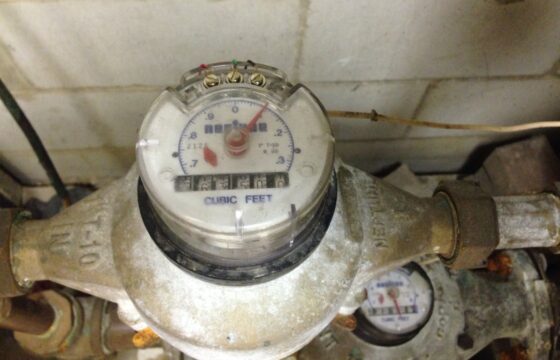
First confirm the supply: a separate irrigation meter or well is not measured by the household meter. If both systems share a meter, use the meter-test result guide and record household use, automatic equipment and the display’s resolution. A changed reading does not isolate the sprinkler, and one unchanged interval can miss small or intermittent flow. Keep the head’s shutdown observations with the readings for the technician.
Do not convert a brief observation into a monthly waste figure without a measured flow rate and a justified duration. A rate observed while a zone is running is not the same as its off-state leakage rate. Keep the repair date so later usage can be compared with similar weather and watering needs.
What should the repair quote include?
Ask for separate details for diagnosis, valve or head components, labor, access or excavation, and landscape restoration. Confirm whether the price includes checking the zone after shutdown as well as during operation.
If the proposed remedy is a check valve, ask why the technician believes the problem is drain-down and whether the product suits the elevation and sprinkler body. If a zone valve is being repaired, ask how the technician will verify it closes. Add the findings to your home plumbing maintenance record.
Frequently asked questions
Does the lowest wet head always mean low-head drainage?
No. Water passing through a zone valve can also appear at a low outlet. Whether supply continues and whether the flow eventually stops help guide the diagnosis.
Will replacing the controller stop a leaking sprinkler?
Only if a confirmed control fault is responsible. Mechanical valve leakage or residual drainage needs a different remedy.
Is a puddle after watering always an underground pipe leak?
No. Drain-down, overspray, runoff, and other water sources can create wet areas. Persistent or damaging wetness still needs investigation.
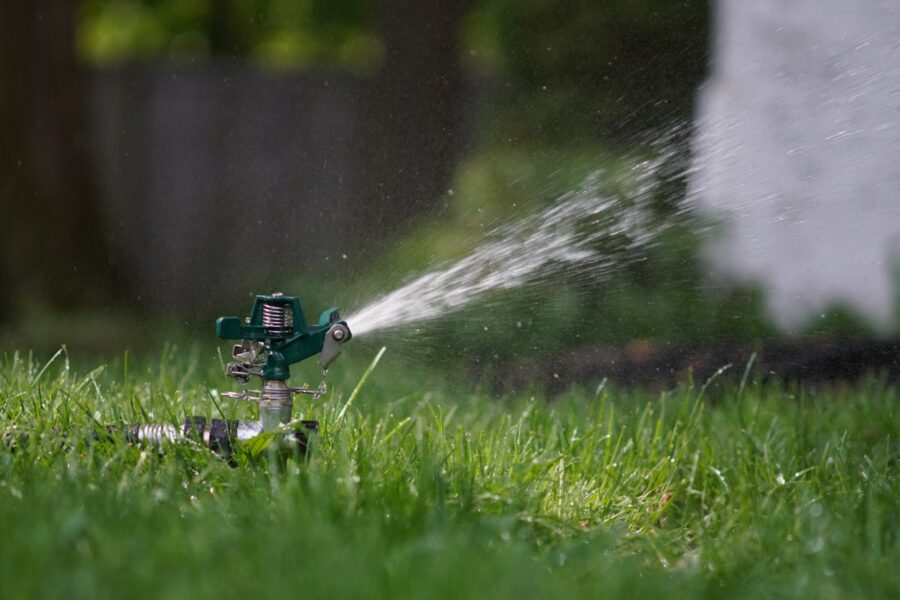
Research-based guidance for US homeowners; system-specific instructions and local requirements take priority. Featured photograph: Paul Moody on Unsplash. It shows an operating impact sprinkler and illustrates lawn watering, not a diagnosed underground irrigation fault.